gensauce.com
  • Gen Z Trends
  • Career & Freelance
  • College & Moving Out
  • Tech & Aesthetics
  • The Job Hunt
  • Travel & Hobbies
Wednesday, September 9, 2026
  • Gen Z Trends
  • Career & Freelance
  • College & Moving Out
  • Tech & Aesthetics
  • The Job Hunt
  • Travel & Hobbies
gensauce.com
  • Gen Z Trends
  • Career & Freelance
  • College & Moving Out
  • Tech & Aesthetics
  • The Job Hunt
  • Travel & Hobbies
gensauce.com
gensauce.com
  • Gen Z Trends
  • Career & Freelance
  • College & Moving Out
  • Tech & Aesthetics
  • The Job Hunt
  • Travel & Hobbies
Copyright 2025 - All Right Reserved
Gen Z Phrases
Gen Z Trends

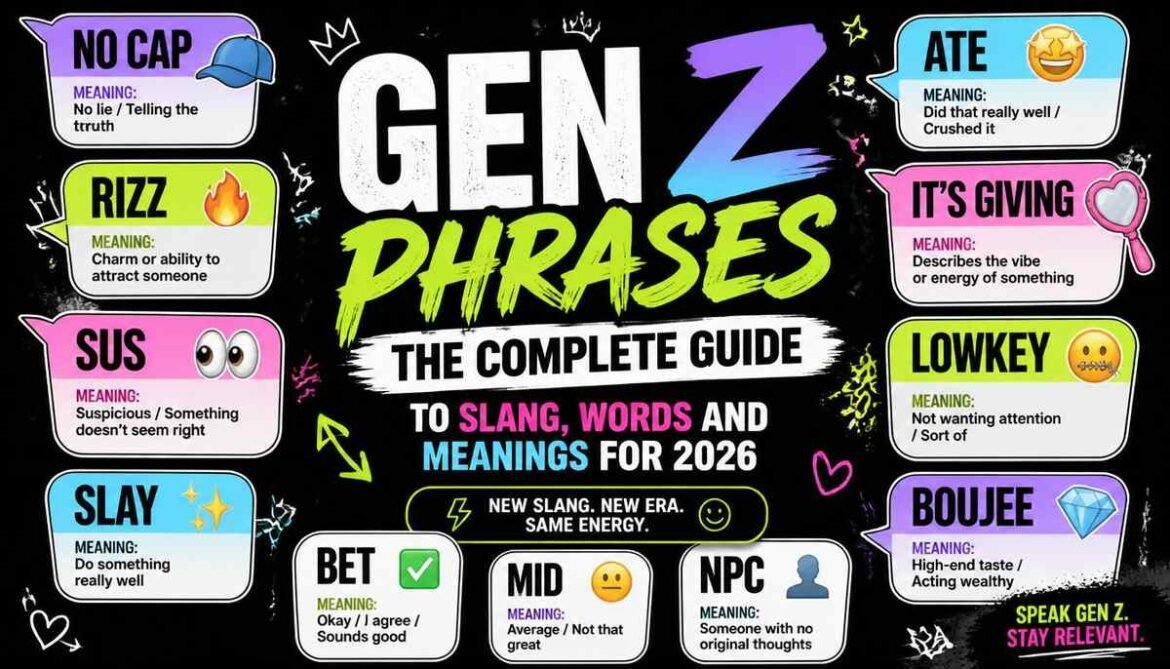
Gen Z Phrases: The Complete Guide to Slang, Words and Meanings for 2026

by Sebastian Vane July 7, 2026
written by Sebastian Vane

Gen Z has its own language. If you have ever heard someone say “no cap,” “it’s giving,” or “that’s bussing” and had no idea what was happening, you are not alone. Whether you are a parent, a teacher, a millennial trying to keep up, or just someone who wants to understand what people are actually saying, this is the guide you need.

Gen Z Phrases 2026: What Is Actually Being Said Right Now
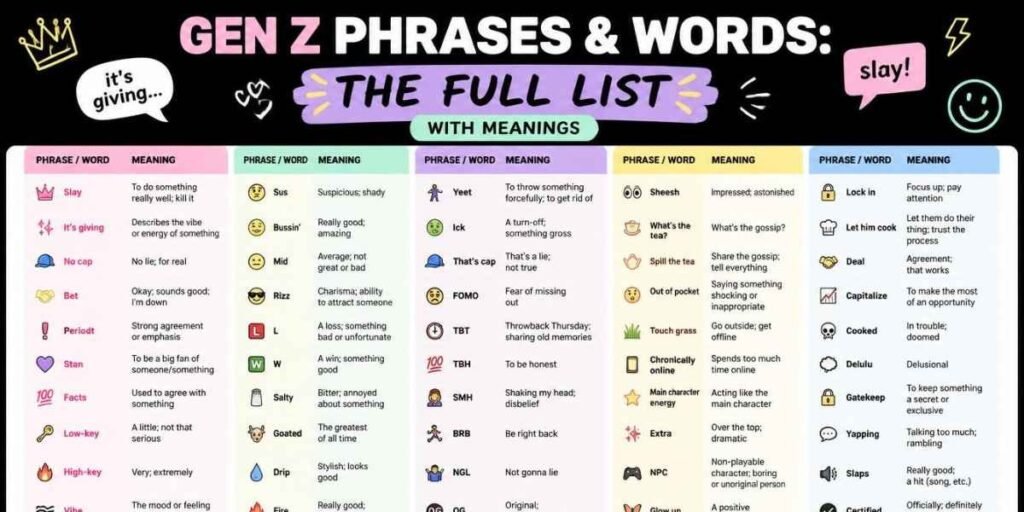
Language moves fast in 2026. Some phrases from 2023 are already considered outdated. New ones appear almost weekly. Here are the terms dominating conversations right now.

Aura means your personal energy or vibe. Someone with good aura is magnetic and cool. “Aura farming” means deliberately doing things to build your reputation or image.

Demure went viral in 2024 and stuck around. It means being modest, quiet, and mindful. “Very demure, very mindful” became a whole aesthetic.

Brain rot describes content that is so mindless it feels like it is rotting your brain. Saying something has brain rot energy is both a criticism and almost a compliment.

Rizz means natural charm or the ability to attract people effortlessly. You either have rizz or you do not. It cannot really be faked.

Slay means to do something exceptionally well. It has been around for a while but Gen Z fully owns it now.

Understood the assignment means someone did exactly what was needed and did it brilliantly. No further explanation required.

It’s giving is used to describe the vibe something is putting out. “It’s giving main character” means someone is acting like the star of their own story.

Ate and left no crumbs means someone executed something perfectly. Nothing to criticise. Completely flawless.

Also Read: Country Life of Gen Z

Gen Z Phrases 2025 That Are Still Being Used
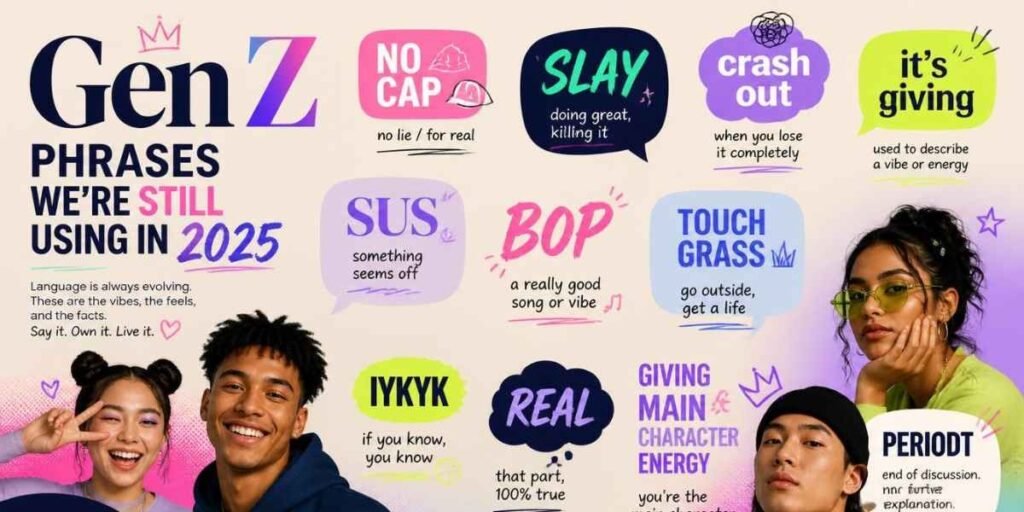
Some 2025 phrases made the cut and are still common in 2026. These have earned their place.

No cap means no lie, genuinely true. “That concert was incredible, no cap.”

Bussin means something is really good, usually food. “This pizza is bussin.”

Lowkey means slightly or secretly. “I love this song.”

Highkey is the opposite. Open and unapologetic about something. “Highkey obsessed with this show.”

Delulu is short for delusional, but in a self-aware, playful way. “I know he does not like me back but I am delulu enough to try.”

Era refers to a personal phase or chapter of your life. “I am in my healing era.” “She is in her villain era.”

Situationship is a romantic situation that is more than friendship but less than a relationship. The status is unclear and usually emotionally complicated.

Ick is a sudden feeling of disgust or repulsion toward someone you were previously attracted to. Once you get the ick, it is usually over.

Touch grass means go outside and disconnect from the internet. Used when someone is being overly online.

Gen Z Phrases Slang: The Core Vocabulary
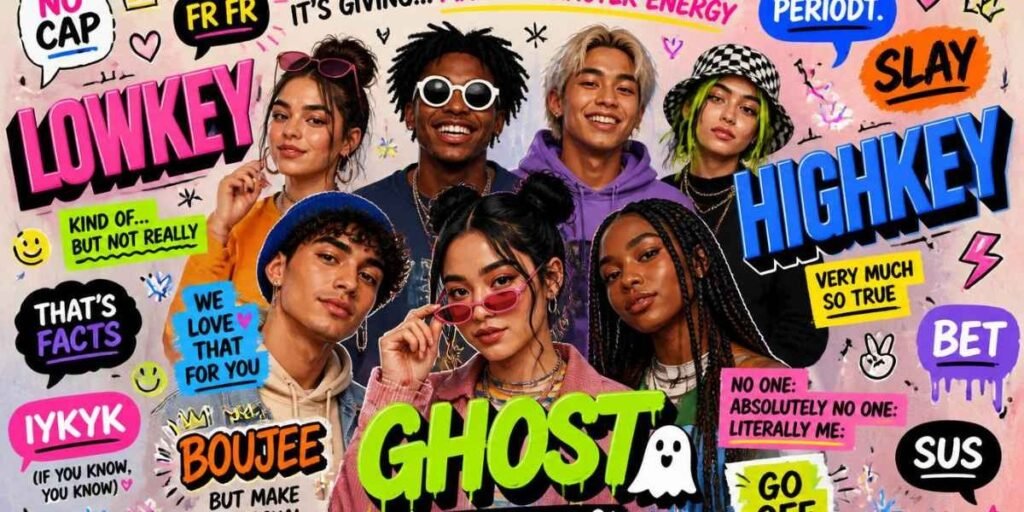
Bet is one of the most versatile Gen Z words. It can mean okay, sounds good, agreed, or I understand. “Want to meet at 6?” “Bet.”

W means a win. “That is a W.” The opposite is L, which means a loss or a failure.

Mid means average or mediocre. Not terrible but not good either. “That film was mid.”

Sus means suspicious or untrustworthy. It exploded from the game Among Us and never left.

Snatched means looking extremely good. Usually used about appearance or an outfit.

Drip refers to great style or a stylish outfit. Someone with drip dresses well consistently.

Sheesh is an exclamation of either shock, admiration, or disbelief depending on context and tone.

Vibe check is an assessment of someone’s energy or mood. You can pass or fail a vibe check.

Hits different means something feels particularly meaningful or special compared to usual.

IYKYK stands for “if you know, you know.” Used for inside references that only certain people will understand.

Gen Z Phrases and Words
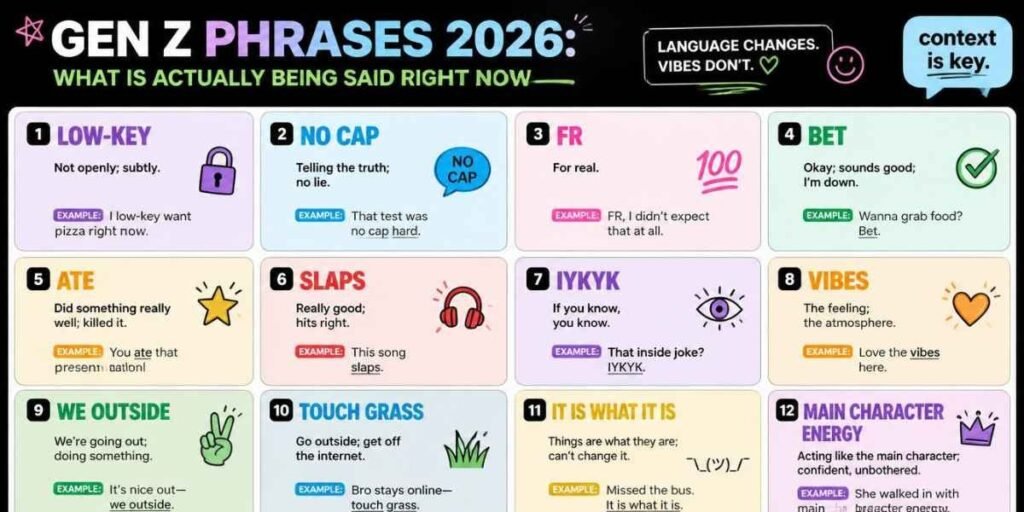
Here is a broader reference of Gen Z vocabulary with clear explanations.

Rent free when someone or something keeps occupying your thoughts without invitation.

Gatekeep deliberately keeping something good to yourself and not sharing it with others.

Stan to be an intense, dedicated fan of someone. Originally from Eminem’s song Stan.

Main character acting like the protagonist of your own life. Can be positive or used to describe someone who is overdramatic.

Pick me  someone who seeks attention and approval by putting others down or presenting themselves as different from everyone else.

Red flag a warning sign in a person’s behaviour or personality that signals potential problems.

Simp someone who does too much for someone they like, often without getting anything back.

Extra over the top or dramatic beyond what is necessary.

Peridot an emphatic full stop on a statement. Used to declare something as fact with no room for debate.

Slaps used for something that is really good, usually music. “This song slaps.”

Sending me something is making you laugh so hard you cannot handle it.

Finesse to skillfully manipulate a situation or person to your advantage.

Cap a lie. “No cap” means no lie. “That is cap” means that is not true.

Glow up a significant positive transformation in someone’s appearance or life.

Bussin is really good, especially food.

Ghosting suddenly cuts off all contact with someone without explanation.

Boujee is living a lavish or luxurious lifestyle. From Migos’s Bad and Boujee.

G.O.A.T. Greatest Of All Time. Used for someone who is the best at what they do.

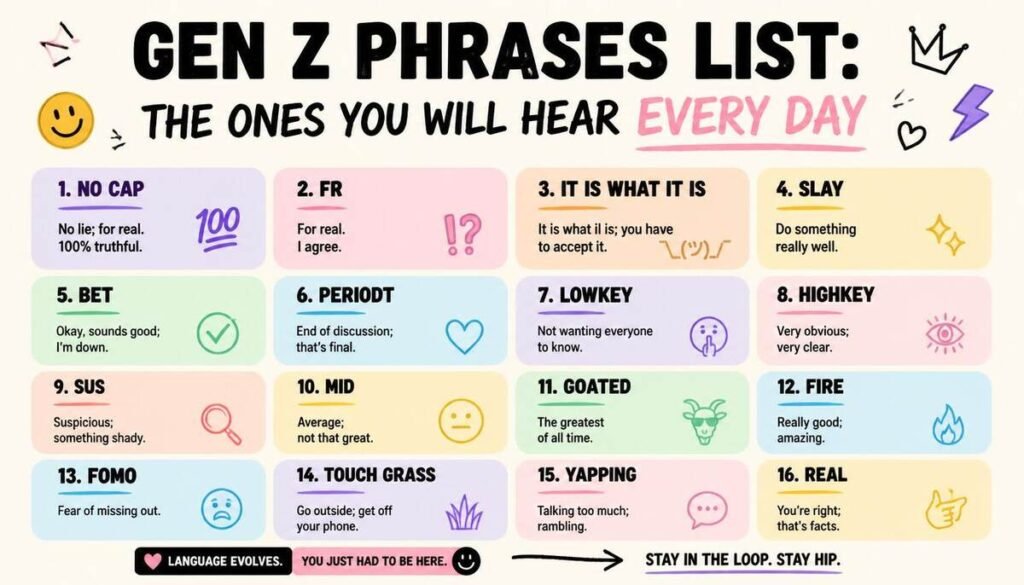
Gen Z Phrases List: The Ones You Will Hear Every Day
Gen Z Phrases List: The Ones You Will Hear Every Day

This is a quick reference for the most frequently used phrases in everyday Gen Z conversation.

“No cap” genuinely, truthfully “Ate that” did something perfectly. “Understood the assignment” executed perfectly. “Not me doing this” self-aware acknowledgment of your own behaviour. “The way I screamed when I saw that.” “Say less” I understand, no need to explain further. “We do not claim them” disowning someone for embarrassing behaviour. “That is so real” I deeply relate to that. “Okay but actually though” genuine agreement after initial sarcasm.cannot stop thinking about it. “Era check” asking which phase of life someone is currently in. “No thoughts head empty” used humorously to describe a blank mental state. “POV:” used on social media to set up a scenario from your perspective. “Main character moment” a situation that feels cinematic or significant.

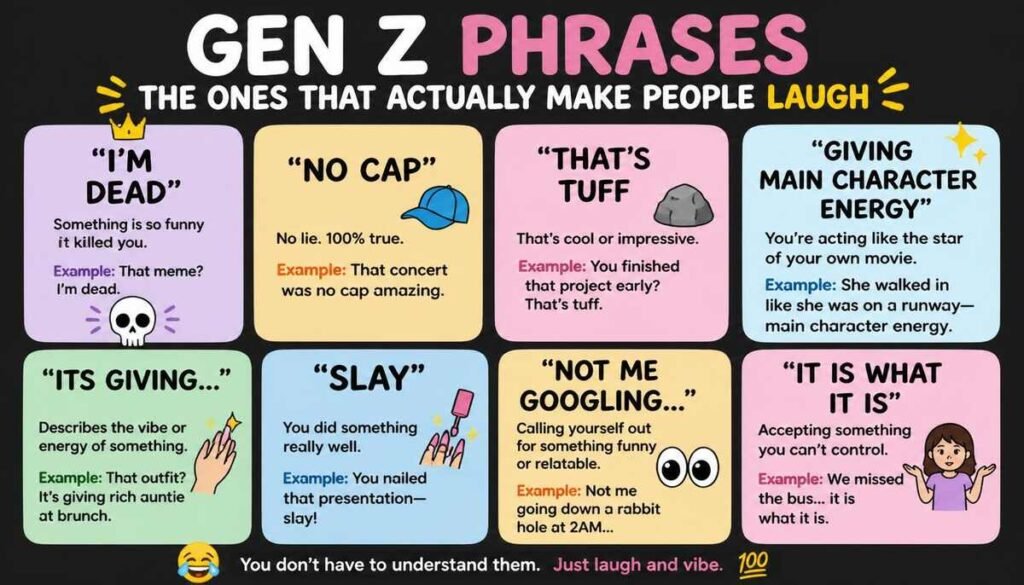
Gen Z Phrases Funny: The Ones That Actually Make People Laugh
Gen Z Phrases Funny: The Ones That Actually Make People Laugh

These are the phrases that started as jokes and became genuinely common.

“I am not like other girls” used satirically to mock outdated pick-me behaviour.

“He is so real for this” used when someone does or says exactly what you were thinking.

“Erm, actually” ironic correction delivered in a mock-pedantic tone.

“This is my Roman Empire” something you think about constantly and cannot explain why. Came from a viral trend about things men think about repeatedly.

“Okay bestie” is used both sincerely and sarcastically depending on the tone.

“Unalive” a softened way to refer to dying or being killed, originally used to avoid content moderation filters.

“That is so slay” something done brilliantly or impressively.

“Not the” used to call out something specific in a humorous, exasperated way. “Not the WiFi cutting out right now.”

“I fear” is used humorously to say you suspect something is true or is about to happen. “I fear I have been delulu about this.”

Gen Z Phrases and Meanings: Clock It and For Cool

Two specific autocomplete terms worth covering in detail.

For cool in Gen Z context usually refers to doing something for the vibe rather than for any practical reason. It overlaps with the concept of doing something “for the aesthetic.” No further justification needed. It just looks good or feels right.

Both of these show how Gen Z phrases often strip language down to its most essential meaning. Clock it is seeing. For cool is vibing. Simple but layered.

How Gen Z Phrases Spread So Fast

Gen Z phrases do not spread the way slang used to. They do not travel through neighbourhoods or friend groups over months. They travel through TikTok, Instagram Reels, and Twitter in hours.

A single viral video can introduce a new phrase to millions of people overnight. The phrase gets repeated in comments, used in response videos, and picked up by brands and media within days. By the time most people learn it exists, Gen Z has already moved on to the next one.

This cycle is why Gen Z slang feels impossible to keep up with. By the time a phrase reaches mainstream media coverage, it is often already considered dated by the people who started it.

Final Thoughts

Gen Z phrases are not just slang. They are a shorthand for a whole set of values and a way of seeing the world. Efficiency, self-awareness, humour, and a deeply ironic relationship with sincerity are all baked into the language.

Whether you are trying to understand your kids, connect with a younger audience, or just follow a conversation without getting lost, knowing these phrases gives you a genuine window into how one of the most culturally influential generations actually communicates. No cap.

July 7, 2026 0 comments
0 FacebookTwitterPinterestEmail
Gen Z Tech Workforce Decline What's Actually Happening in 2026 - Gen Z Tech Workforce Decline
Career & Freelance

Gen Z Tech Workforce Decline: What’s Actually Happening in 2026

by Sebastian Vane July 4, 2026
written by Sebastian Vane

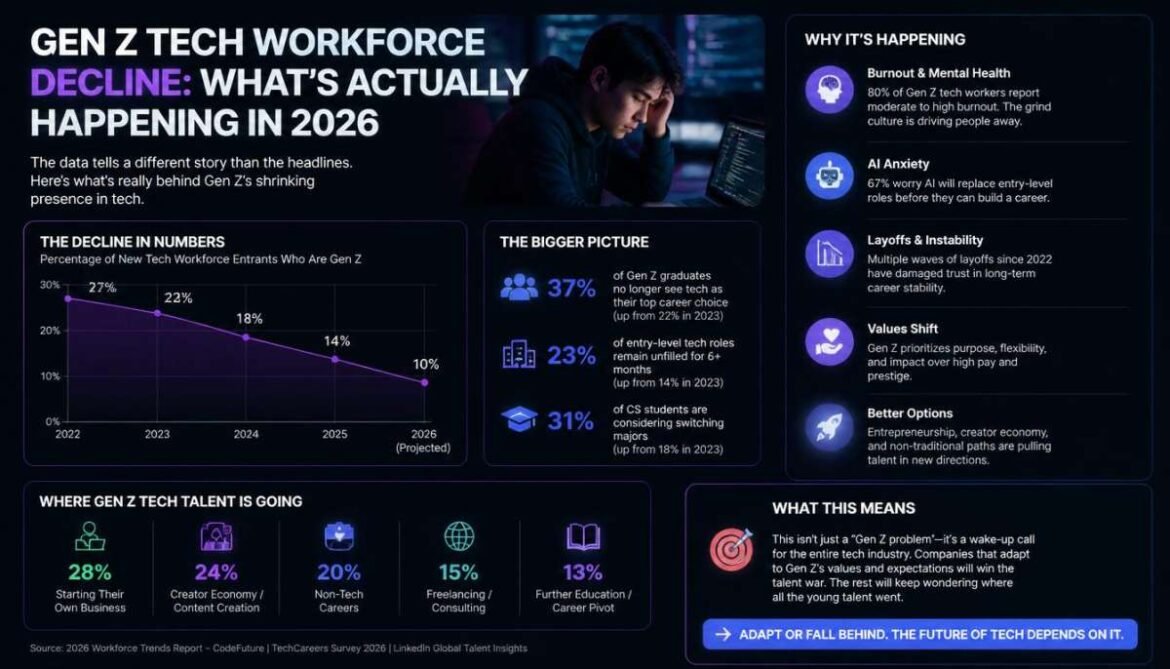
The Gen Z tech industry workforce decline isn’t happening because Gen Z lacks talent  it’s happening because the traditional entry-level path into tech is disappearing. Junior tech job postings have fallen by roughly 35% since 2023, while AI automation and outsourcing have replaced many of the tasks that once trained new hires. 

Although recent computer science graduates face rising unemployment, this doesn’t mean the tech industry is dying. It means breaking into tech now requires specialized skills, a strong portfolio, and AI fluency rather than relying on a degree alone. 

Is the Gen Z tech workforce actually declining?

Is the Gen Z tech workforce actually declining - Gen Z Tech Workforce Decline

Yes at the entry level specifically, and the numbers are stark. Junior tech job postings have dropped about 35% since January 2023, according to labor research firm Revelio Labs. Meanwhile, computer science new grads are posting a 6.1% unemployment rate, nearly double the rate of philosophy majors and higher than almost every non-STEM field. Computer engineering grads are doing even worse, at roughly 7.5%.

None of this means tech is dying. It means the bottom rung of the career ladder — the roles that used to train people into the industry has been compressed, automated, or quietly removed.

The core problem: entry-level roles are vanishing, not tech itself

The core problem entry-level roles are vanishing, not tech itself

For decades, entry-level  meant something specific: drafting reports, pulling data, fixing bugs nobody senior wanted to touch, writing boilerplate code. That’s exactly the category of work large language models and AI coding assistants now do in seconds.

In practice, this means a junior developer who used to spend six months learning the ropes on low-stakes tasks now has fewer of those tasks to learn on because a tool already did them before the ticket got assigned.

Technology roles are the most exposed of any industry. Roughly 40% of tech employers say AI is already replacing entry-level positions, the highest share of any sector, according to a 2026 GMAC recruiter survey reported by Fortune. Manufacturing is close behind, but tech is leading the shift.

Also Read : The Future of Housing Market for Gen Z in 202

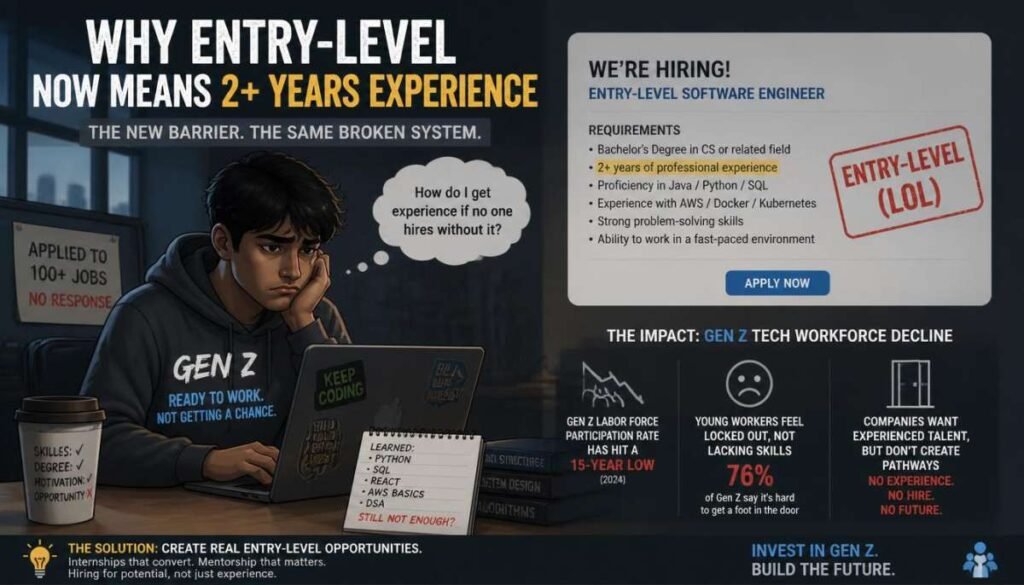
Why entry-level now means 2+ years experience

Why entry-level now means 2+ years experience

Here’s the part that makes Gen Z job seekers want to throw their laptop into the sea: more than 60% of entry-level software and IT job postings now require three or more years of experience. That’s not entry-level. That’s a catch-22 with a job title slapped on it.

Compounding this, a meaningful share of open listings aren’t real hires at all. Roughly 45% of HR professionals admit to regularly posting “ghost jobs” with no intention of filling them, often to test the market, build a talent pipeline, or make the company look like it’s growing. For a job seeker, that means a chunk of every application goes into a void that was never going to respond.

Why this is happening: four forces stacking at once

No single cause explains the Gen Z tech workforce decline. It’s four trends compounding simultaneously.

1. AI absorbing junior tasks. Coding assistants, automated QA, and AI-driven documentation tools now do the “learning work” that used to justify hiring a junior in the first place.

2. A post-2022 hiring hangover. Tech massively over-hired in 2021–2022, then spent 2023–2025 correcting. That correction put experienced engineers back on the market, and companies naturally prioritize them over unproven grads.

3. Credential inflation. A decade of rising CS enrollment and coding bootcamps created far more junior candidates than there are junior roles to absorb them.

4. A structural reset, not a cyclical dip. Analysts increasingly describe this as permanent, not temporary. Once a company rebuilds its workflows around a leaner, AI-augmented team, there’s little incentive to recreate the old volume of junior hiring even once the economy improves.
That last point matters more than people realize. Industries cutting junior headcount now are setting themselves up for a thinner pipeline of mid-level talent five to ten years from now. Gen Z is absorbing the cost of a decision the industry is making for its own future.

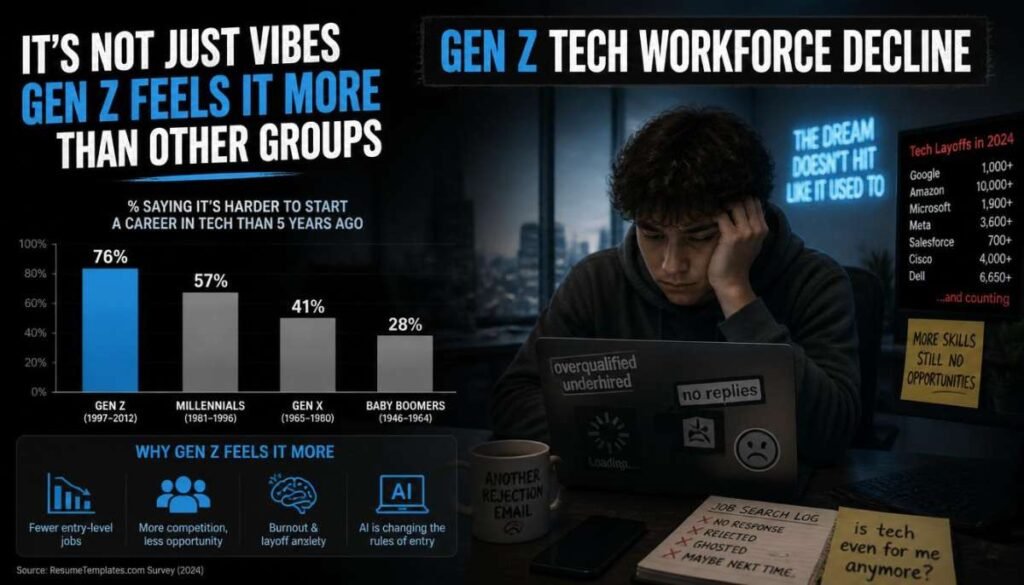
It’s not just vibes Gen Z feels it more than other groups

It's not just vibes Gen Z feels it more than other groups

Job satisfaction data backs this up. Just 57% of workers under 25 report being satisfied with their jobs, compared to 72% of workers over 55 and in a year when overall job satisfaction hit a record high, young workers were the only group whose satisfaction dropped.

Nearly half of Gen Z job hunters (49%) now say they believe AI has reduced the value of their degree. That’s not just economic anxiety it’s a direct response to watching automated systems do work they spent four years training for.

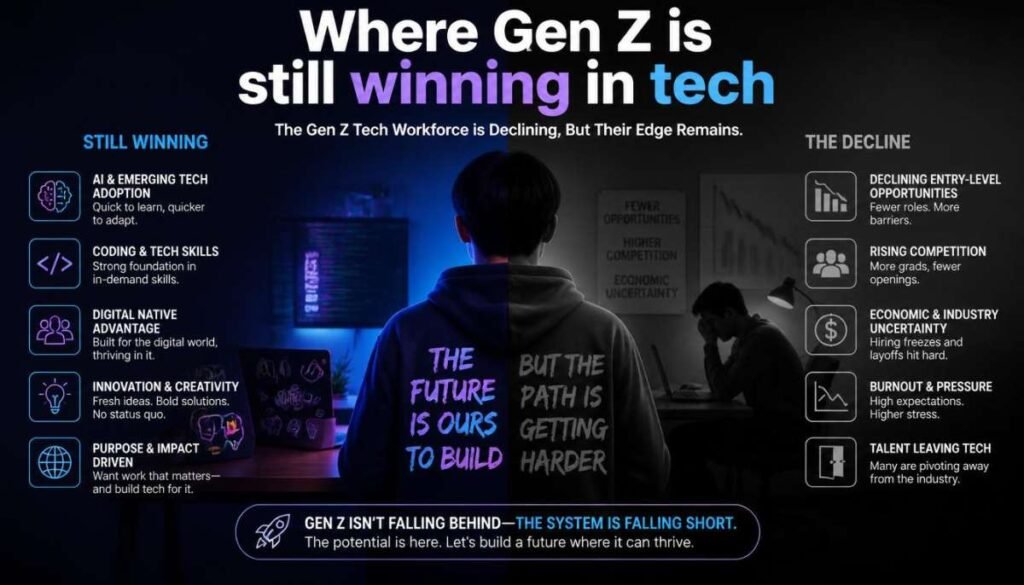
Where Gen Z is still winning in tech

Where Gen Z is still winning in tech

The picture isn’t uniformly bleak. Specialization is the clearest differentiator between Gen Z workers who are landing offers and those stuck refreshing job boards.

Roles in AI/ML engineering, cybersecurity, cloud infrastructure, and data engineering remain near full employment, even as generalist software engineering roles struggle. The Bureau of Labor Statistics still projects 15% growth in software developer employment through 2034 about five times the average for all occupations but that growth is concentrated in specialized, harder-to-automate work, not generic coding.

Starting salaries also tell a more optimistic story than the unemployment headlines suggest. Computer science majors are still projected to earn around $81,500 to start in 2026, one of the highest starting salaries of any major, even with the higher unemployment rate. The market isn’t rejecting CS grads outright it’s rejecting the generalist version of the role that used to be enough.

How Gen Z is adapting

Rather than waiting for entry-level hiring to recover, a lot of Gen Z workers are building around the problem entirely.

  • 57% of Gen Zers now juggle a side hustle alongside or instead of traditional employment, compared to just 21% of Baby Boomers.
  • Nearly 38% of recent grads are considering starting their own business rather than pursuing a corporate role.
  • 32.5% are exploring gig work, and 28% are building freelance income.
  • Despite the shrinking pipeline, Gen Z still makes up over 80% of all tech job applications, according to ICIMS data they haven’t given up on the industry, they’re just applying differently.

In practice, this looks like grads treating a job search less like a single funnel and more like a portfolio: freelance contracts, open-source contributions, a niche specialization, and a side project that doubles as proof of skill all running at once instead of one resume sitting in an ATS queue.

What actually moves the needle right now

Recruiters and labor economists tracking this trend consistently point to the same handful of strategies:

  1. Specialize instead of staying a generalist. Cybersecurity, cloud infrastructure, and applied ML consistently outperform generic “software engineer” postings.
  2. Build a visible body of work. GitHub contributions, shipped side projects, and public writing carry more weight than a GPA line on a resume.
  3. Treat AI fluency as table stakes. Employers aren’t looking for people who avoid AI tools — they’re looking for people who direct them effectively. Roughly 35% of entry-level postings now explicitly require AI skills.
  4. Network past the black-box application. A large share of relevant hires still happen through warm introductions rather than cold job-board submissions.
  5. Expect a longer timeline. Time-to-offer for CS grads has roughly doubled compared to 2021 benchmarks this is a marathon, not a four-month sprint.

None of this erases the structural problem. But it’s the difference between candidates who get traction and candidates who don’t.

The bottom line

The Gen Z tech workforce decline is real, measurable, and driven by structural shift not generational laziness or lack of hustle. AI has absorbed a meaningful share of the tasks that used to train junior hires, hiring hasn’t caught up to the graduate pipeline, and “entry-level” has quietly redefined itself into something closer to mid-level.

The generation entering tech right now is doing so under conditions no previous cohort faced: automation eating the on-ramp before they ever got a chance to use it. The ones finding traction aren’t the ones with the best degree  they’re the ones treating this as a specialization and positioning problem, not a luck proble

Gen Z Tech Hiring Key 2026 Data Points

MetricFigureSource
Decline in junior tech job postings since Jan 2023~35%Revelio Labs
CS new-grad unemployment rate6.1%Federal Reserve Bank of New York
Computer engineering new-grad unemployment rate7.5%Federal Reserve Bank of New York
Entry-level software/IT jobs requiring 3+ years experience60%+Rezi.ai 2026 report
Tech employers using AI to replace entry-level roles~40%GMAC recruiter survey (via Fortune)
Entry-level postings requiring AI skills~35%NACE
Gen Z share of all tech job applications80%+ICIMS
Projected CS starting salary, Class of 2026~$81,500NACE Winter Salary Survey

FAQ SECTION

Is the tech industry actually shrinking for Gen Z, or is this overblown?

 It’s real but specific: overall tech employment isn’t collapsing, but entry-level tech hiring has dropped sharply, with junior job postings down around 35% since 2023.

Why is computer science unemployment higher than less technical majors?

 Computer science new grads face a 6.1% unemployment rate higher than philosophy or art history because AI has automated much of the routine work junior developers used to be hired to do, on top of a post-2022 hiring correction.

Is AI actually replacing entry-level tech jobs? 

Yes, at least partially around 40% of tech employers report using AI to replace entry-level positions, the highest share of any industry surveyed.

What tech specializations are still hiring Gen Z grads? 

Cybersecurity, cloud infrastructure, AI/ML engineering, and applied data roles remain near full employment, even as generalist software engineering roles have contracted.

Are entry-level job postings honest about what they require? 

Often not. More than 60% of entry-level software and IT postings require 3+ years of experience, and a significant share of listed jobs are “ghost jobs” with no real hiring intent behind them.

How are Gen Z workers responding to the tech hiring slowdown?

 Many are diversifying: 57% now hold a side hustle, and a large share are pursuing freelance work, gig work, or entrepreneurship instead of relying solely on traditional job applications.

July 4, 2026 0 comments
0 FacebookTwitterPinterestEmail
Top 10 Gen Z Actors Shaping Hollywood in 2026 - Top 10 Gen Z Actors
Career & Freelance

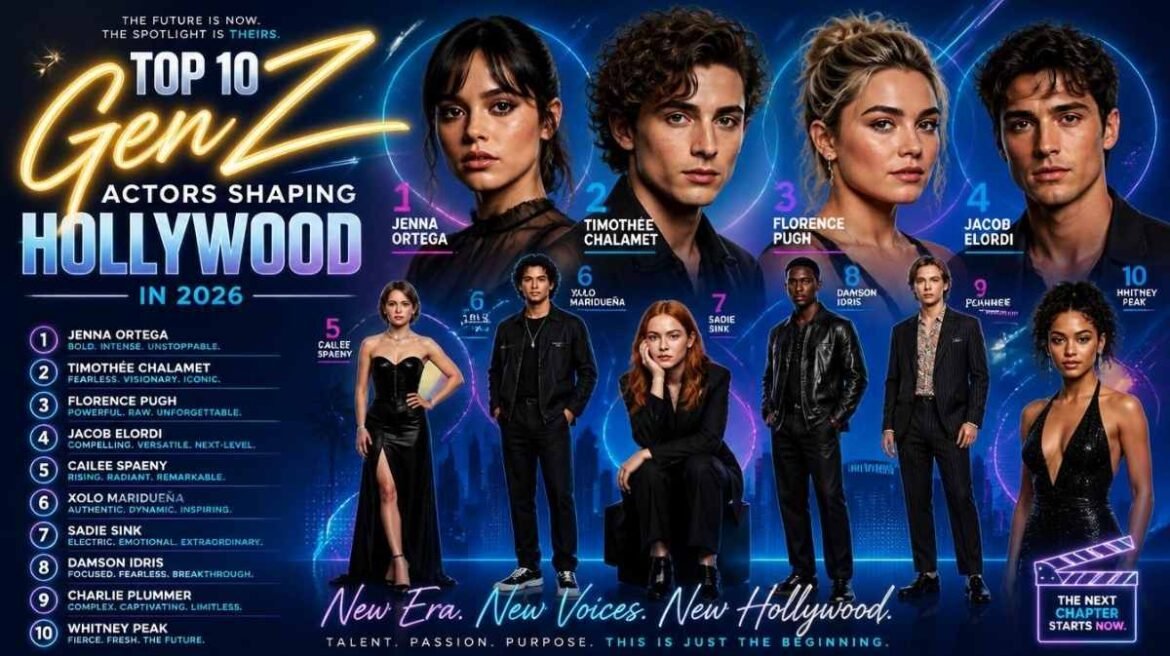
Top 10 Gen Z Actors Shaping Hollywood in 2026

by Sebastian Vane June 27, 2026
written by Sebastian Vane

Gen Z generally the cohort born between 1997 and 2012 has produced its own wave of professional actors who came of age on streaming platforms rather than in the studio system that built earlier generations of stars. 

This list focuses on performers who were actually born within that window, rather than the looser beloved by Gen Z framing you’ll see on ranking sites like Statista, which often blend Millennial actors into “Gen Z favorite” lists based on audience popularity rather than the actor’s own birth year.

One quick note on methodology: birth-year classification for Gen Z varies slightly by source (Pew Research uses 1997–2012; some marketing definitions stretch it to 1995 or 1996). Where an actor sits right on that line as Zendaya does, having been born in September 1996 we’ve said so explicitly rather than quietly rounding her into the generation for the sake of a tidier list.

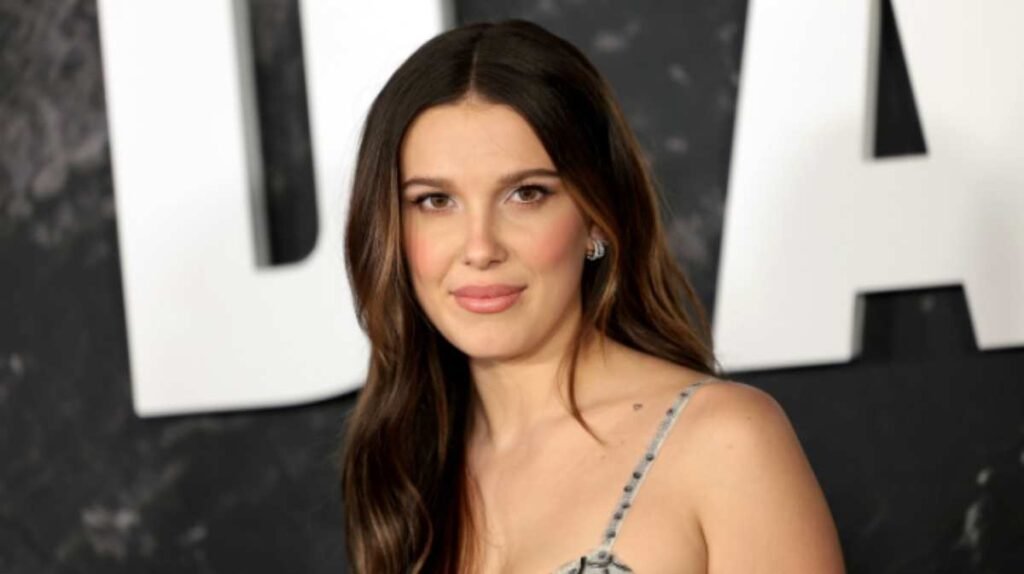
1. Millie Bobby Brown

Millie Bobby Brown

Biography

  • Date of birth: February 19, 2004
  • Age (2026): 22
  • Nationality: British (born in Marbella, Spain, to British parents)
  • Profession: Actress, producer, author, entrepreneur
  • Education: Homeschooled during her acting career; no public college enrollment

Early Life

Brown was born in Marbella, Spain, and moved with her family to Bournemouth, England, at age four, before relocating to Orlando, Florida, around age eight. She’s the third of four siblings. Brown was discovered by a talent scout at a weekend acting workshop, which led to her family’s move to Los Angeles to pursue auditions full-time. She was born partially deaf in one ear and has spoken publicly about how it hasn’t affected her acting or singing.

Acting Debut

Brown’s first credited role was in the anthology series Once Upon a Time in Wonderland (2013), followed by guest spots on Grey’s Anatomy, NCIS, and Modern Family.

Career Highlights

Her breakthrough came in 2016 as Eleven in Netflix’s Stranger Things, a role she’s played across five seasons through 2025. She starred in and produced the Enola Holmes film series (2020, 2022) for Netflix, reportedly earning a flat $10 million for the sequel according to Variety. Other credits include Godzilla: King of the Monsters (2019), Godzilla vs. Kong (2021), Damsel (2024, also executive producer), and The Electric State (2025) opposite Chris Pratt.

Awards & Nominations

Brown has received two Primetime Emmy nominations for Outstanding Supporting Actress in a Drama Series (2017, 2018) for Stranger Things, plus a Screen Actors Guild Award nomination. She’s collected multiple MTV Movie & TV Awards and Teen Choice Awards, and won the 43rd Saturn Award for Best Performance by a Younger Actor. She was included in Time‘s 100 Most Influential People list in 2018.

  • Total nominations (major): 2 Emmy, multiple SAG/MTV/Teen Choice
  • Most prestigious recognition: Time 100 (2018); Emmy nominations

Net Worth (2026)

Estimates vary widely by source, generally landing between $14 million and $25 million. Income sources include her Stranger Things salary (reported at roughly $300,000+ per episode in later seasons), film paydays from the Enola Holmes franchise, and her skincare brand Florence by Mills, which she founded in 2019.

Most Successful Movies

MovieYearRole
Enola Holmes 22022Enola Holmes (also producer)
Godzilla vs. Kong2021Madison Russell
Enola Holmes2020Enola Holmes (also producer)
Godzilla: King of the Monsters2019Madison Russell

Why She’s Popular Among Gen Z

Brown grew up on-screen in a way that mirrors her audience’s own adolescence, and she’s been outspoken about the sexualization and online bullying she faced as a minor a topic that resonates with young fans navigating social media themselves. Her Florence by Mills brand was built specifically for a Gen Z/Gen Alpha customer base, and her UNICEF Goodwill Ambassador role (the youngest ever appointed) adds a philanthropic dimension to her public image.

Fun Facts

  • She is completely deaf in one ear.
  • She published a novel, Nineteen Steps (2023), based on her family history.
  • Millie Bobby Brown married Jake Bongiovi, the son of legendary musician Jon Bon Jovi, in May 2024.
  • She auditioned for a role on Game of Thrones (Lyanna Mormont) before landing Stranger Things.

Quick Profile Table

FieldDetail
Full NameMillie Bonnie Bongiovi (née Brown)
Date of BirthFebruary 19, 2004
Age (2026)22
NationalityBritish
Years Active2013–present
DebutOnce Upon a Time in Wonderland (2013)
Net Worth~$14M–$25M (estimated)
Awards WonSaturn Award; Time 100 honoree
Famous ForEleven in Stranger Things

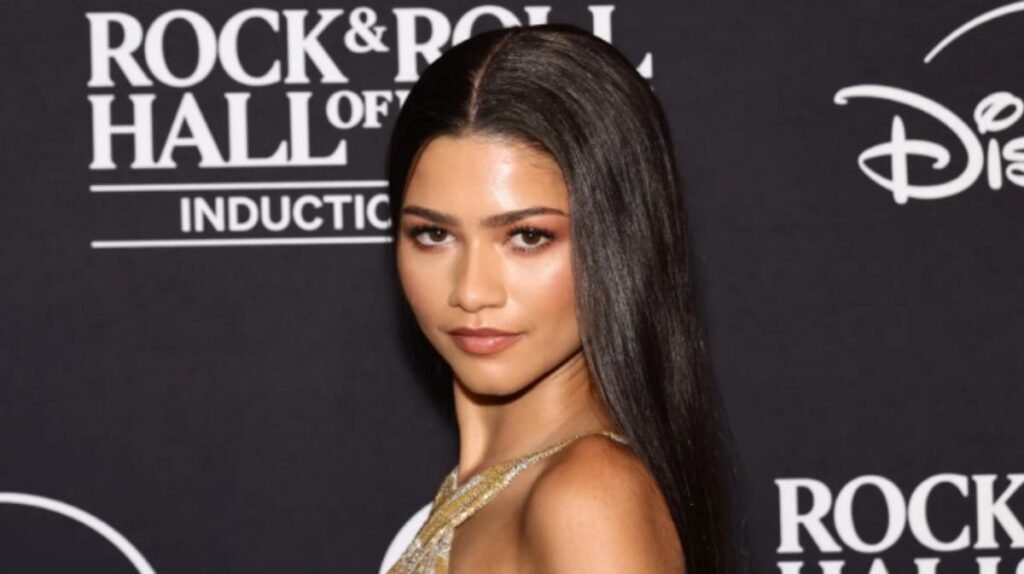
2. Zendaya

Zendaya

Biography

  • Date of birth: September 1, 1996
  • Age (2026): 29
  • Nationality: American
  • Profession: Actress, singer, producer, dancer
  • Education: Oakland School for the Arts

A note on generational classification

Zendaya’s 1996 birth year places her right on the Millennial/Gen Z boundary some sources (including one biography site referenced in our research) classify her as a Millennial, while pop-culture coverage almost universally treats her as a Gen Z figure because of her career timing and cultural influence. We’ve kept her on this list because of how consistently she’s positioned as a Gen Z icon in entertainment coverage, but readers focused on a strict 1997+ cutoff should treat her as a borderline case.

Early Life

Born in Oakland, California, to teacher-parents Claire Stoermer and Kazembe Ajamu Coleman, Zendaya grew up the youngest of six siblings.   She trained at the American Conservatory Theater and performed hula with the Academy of Hawaiian Arts as a child.

Acting Debut

Zendaya‘s breakout was as Rocky Blue on Disney Channel’s Shake It Up (2010–2013), following early work as a child model and backup dancer.

Career Highlights

She transitioned from Disney Channel into prestige and blockbuster work: MJ in the Spider-Man franchise (2017–2021), Rue Bennett in HBO’s Euphoria (2019–2026), Chani in Denis Villeneuve’s Dune films (2021, 2024), and a lead, co-producing role in Challengers (2024). Her films as a leading actress have collectively grossed billions worldwide.

Awards & Nominations

Zendaya has won two Primetime Emmy Awards for Outstanding Lead Actress in a Drama Series (2020, 2022) for Euphoria becoming the youngest actress to win in that category — plus a Golden Globe Award (2023). She was named to Time‘s 100 Most Influential People list in 2022.

  • Total wins (major): 2 Emmys, 1 Golden Globe
  • Most prestigious recognition: Youngest-ever winner, Emmy for Lead Actress in a Drama Series

Net Worth (2026)

Estimates cluster between $30 million and $40 million, drawn from her acting fees (reportedly $8–10 million per major film role), her Euphoria salary, and brand ambassadorships with Louis Vuitton and Bulgari.

Most Successful Movies

MovieYearRole
Dune: Part Two2024Chani
Challengers2024Tashi Duncan
Spider-Man: No Way Home2021MJ
The Greatest Showman2017Anne Wheeler

Why She’s Popular Among Gen Z

Zendaya’s fashion partnership with stylist Law Roach turned her red-carpet appearances into cultural events, and her willingness to speak on representation and racism in Hollywood including her 2015 Instagram response to criticism of her dreadlocks built long-term credibility with younger audiences.

Also Read : Best Online Internships for Gen Z Career Growth in 2026

Fun Facts

  • She’s left-handed.
  • Her first acting role was as Lady Anne in a childhood production of Richard III.
  • She won the CFDA Fashion Icon Award in 2021, the youngest recipient in its history.
  • Reports and public statements from mid-2026 indicate she married longtime partner and Spider-Man co-star Tom Holland.

Quick Profile Table

FieldDetail
Full NameZendaya Maree Stoermer Coleman
Date of BirthSeptember 1, 1996
Age (2026)29
NationalityAmerican
Years Active2010–present
DebutShake It Up (2010)
Net Worth~$30M–$40M (estimated)
Awards Won2 Emmys, 1 Golden Globe
Famous ForRue in Euphoria; MJ in Spider-Man

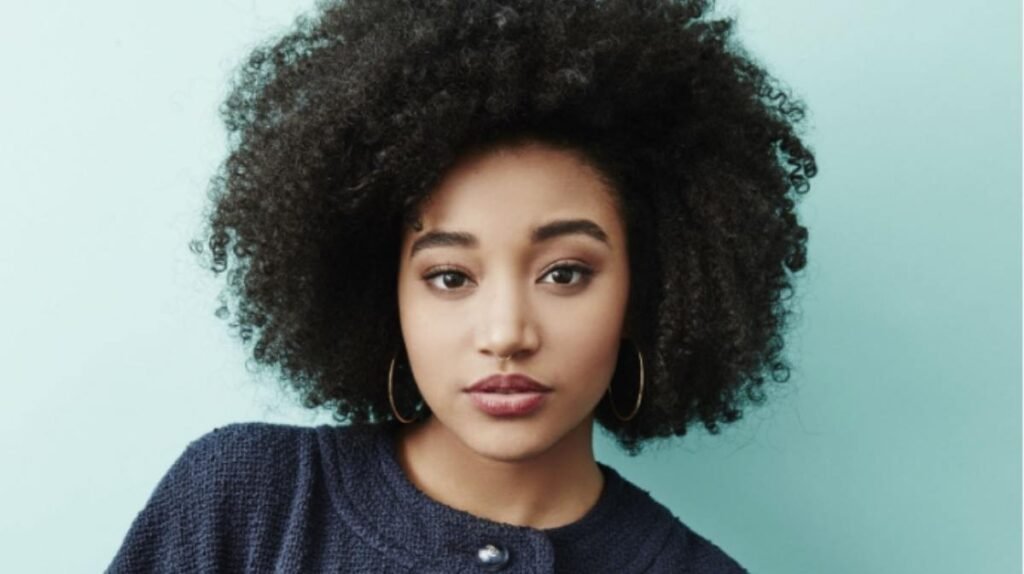
3. Amandla Stenberg

Amandla Stenberg

Biography

  • Date of birth: October 23, 1998
  • Age (2026): 27
  • Nationality: American
  • Profession: Actor, singer, activist
  • Education: Briefly enrolled at NYU’s Tisch School of the Arts before leaving to focus on acting

Early Life

Born in Los Angeles to a Danish father and an American mother, Stenberg began modeling for Disney catalogs at age four and later appeared in national commercials before moving into film.

Acting Debut

Stenberg debuted in the action film Colombiana (2011) as the young version of Zoe Saldaña’s character.

Career Highlights

Their breakout role was Rue in The Hunger Games (2012), a film that grossed roughly $694 million worldwide. They went on to lead The Hate U Give (2018), voice a role in Spider-Man: Into/Across the Spider-Verse, and star in the Disney+ Star Wars series The Acolyte (2024).

Awards & Nominations

Stenberg won a Teen Choice Award (Choice Movie Chemistry, 2012) for The Hunger Games and has been nominated for multiple NAACP Image Awards, Critics’ Choice Awards, and Black Reel Awards.

  • Total nominations: Multiple NAACP Image, Black Reel, and Critics’ Choice nods
  • Most prestigious recognition: Named to Time’s Most Influential Teens (2015, 2016)

Net Worth (2026)

Estimates range from roughly $1.5 million to $3 million, sourced primarily from acting fees, modeling, and brand partnerships.

Most Successful Movies

MovieYearRole
The Hunger Games2012Rue
The Hate U Give2018Starr Carter
Spider-Man: Across the Spider-Verse2023Voice role

Why They’re Popular Among Gen Z

Stenberg has used their platform for direct commentary on race, gender, and LGBTQ+ issues since their teens — including the widely shared video essay “Don’t Cash Crop My Cornrows” — which built an early reputation as an activist-actor well before that combination became common among young celebrities.

Fun Facts

  • Their first name means “power” in Zulu and Xhosa.
  • They were named Feminist of the Year by the Ms. Foundation for Women in 2015.
  • They co-wrote a children’s graphic novel, Niobe: She Is Life.
  • They turned down an audition to play Shuri in Black Panther.

Quick Profile Table

FieldDetail
Full NameAmandla Stenberg
Date of BirthOctober 23, 1998
Age (2026)27
NationalityAmerican
Years Active2011–present
DebutColombiana (2011)
Net Worth~$1.5M–$3M (estimated)
Awards WonTeen Choice Award
Famous ForRue in The Hunger Games

4. Kiernan Shipka

Biography

  • Date of birth: November 10, 1999
  • Age (2026): 27
  • Nationality: American
  • Profession: Actress
  • Education: Homeschooled via Laurel Springs School

Early Life

Born in Chicago to real estate developer John Young Shipka and Erin Ann Brennan, Shipka began modeling in commercials as an infant and made her TV debut at five months old on ER. Her family relocated to Los Angeles when she was six to support her acting career.

Acting Debut

After early guest spots (Monk, Heroes), Shipka’s first major role was Sally Draper on AMC’s Mad Men, which she won after two auditions and played from 2007 to 2015.

Career Highlights

Shipka led Netflix’s Chilling Adventures of Sabrina (2018–2020) as Sabrina Spellman and later joined Riverdale. Her film work has expanded into genre and awards-adjacent projects: Longlegs (2024), Twisters (2024), Red One (2024), and The Last Showgirl (2024).

Awards & Nominations

As part of the Mad Men ensemble, Shipka won two Screen Actors Guild Awards for Outstanding Performance by an Ensemble in a Drama Series (2009, 2010). She’s also won Young Artist and Young Hollywood Awards and was named one of Time‘s 25 Most Influential Teens in 2014.

  • Total wins: 2 SAG (ensemble), multiple Young Artist/Young Hollywood
  • Most prestigious recognition: SAG Award (ensemble, twice)

Net Worth (2026)

Estimates generally range from $3 million to $4 million.

Most Successful Movies

MovieYearRole
Twisters2024Supporting role
Red One2024Supporting role
Longlegs2024Supporting role

Why She’s Popular Among Gen Z

Shipka effectively grew up twice on screen for Gen Z audiences first as a child actor in a prestige drama (Mad Men), then as the lead of a supernatural teen series (Sabrina) that streamed directly to the generation she belongs to, giving her rare crossover appeal between “critics’ favorite” and “fandom favorite.”

Fun Facts

  • She has a black belt in taekwondo.
  • She began ballroom dance lessons at age five.
  • She voiced Jinora in Nickelodeon’s The Legend of Korra.
  • She learned American Sign Language for her role in The Silence (2019).

Quick Profile Table

FieldDetail
Full NameKiernan Brennan Shipka
Date of BirthNovember 10, 1999
Age (2026)27
NationalityAmerican
Years Active2000–present (professionally since childhood)
DebutER (2000, infant role)
Net Worth~$3M–$4M (estimated)
Awards Won2 SAG Awards (ensemble)
Famous ForSally Draper in Mad Men; Sabrina Spellman

Gen Z Actors Comparison (Age, Nationality, Net Worth, Breakout Role)

ActorBornAge (2026)NationalityEst. Net WorthBreakout Role
Millie Bobby BrownFeb 19, 200422British$14M–$25MEleven, Stranger Things
Zendaya*Sep 1, 199629American$30M–$40MRocky Blue, Shake It Up
Amandla StenbergOct 23, 199827American$1.5M–$3MRue, The Hunger Games
Kiernan ShipkaNov 10, 199927American$3M–$4MSally Draper, Mad Men
Thomasin McKenzieJul 26, 200025New Zealander$1M–$4MTom, Leave No Trace
Sophia LillisFeb 13, 200224American$1M–$1.5MBeverly Marsh, It
Noah JupeFeb 25, 200521BritishLow single-digit millionsMarcus, A Quiet Place
Jacob TremblayOct 5, 200619Canadian~$2MJack, Room

5. Thomasin McKenzie

Thomasin McKenzie

Biography

  • Date of birth: July 26, 2000
  • Age (2026): 25
  • Nationality: New Zealander
  • Profession: Actress
  • Education: Samuel Marsden Collegiate School, Wellington

Early Life

McKenzie was born in Wellington, New Zealand, into an acting family — her mother, Miranda Harcourt, and father, Stuart McKenzie, both work in film, and her grandmother, Dame Kate Harcourt, was a noted New Zealand actress. She initially resisted following the family trade before “falling in love with acting.”

Acting Debut

She debuted in the short film Existence (2012) alongside her brother, and had a minor role in The Hobbit: The Battle of the Five Armies (2014).

Career Highlights

McKenzie’s breakout was Leave No Trace (2018), playing a war veteran’s daughter. She went on to star in Jojo Rabbit (2019), Last Night in Soho (2021), and The Power of the Dog (2021), and led Eileen (2023).

Awards & Nominations

She won the National Board of Review’s Breakthrough Performance Award (2018) for Leave No Trace and has been nominated for a Critics’ Choice Award and a Detroit Film Critics Society Award, among others.

  • Total wins: National Board of Review (Breakthrough Performance)
  • Most prestigious recognition: Cast member of Jojo Rabbit, winner of the Best Adapted Screenplay Oscar, and The Power of the Dog, nominated for 12 Oscars

Net Worth (2026)

Estimates vary considerably across sources, generally in the $1 million to $4 million range — a wide spread that reflects how little of her earnings have been independently verified.

Most Successful Movies

MovieYearRole
Jojo Rabbit2019Elsa Korr
The Power of the Dog2021Lola Gordon
Last Night in Soho2021Eloise “Ellie” Turner

Why She’s Popular Among Gen Z

McKenzie has built a reputation as an “actor’s actor” for a generation that increasingly follows filmmakers as much as franchises — her collaborations with Taika Waititi, Jane Campion, and Edgar Wright have made her a recognizable name among cinephile-leaning Gen Z audiences even without a tentpole franchise role.

Fun Facts

  • She’s the granddaughter of New Zealand acting legend Dame Kate Harcourt.
  • Her parents co-directed the film The Changeover (2017), in which she starred.
  • She played Queen Philippa of Denmark in The King (2019).
  • She was cast to play American gymnast Kerri Strug in an upcoming Olivia Wilde-directed film.

Quick Profile Table

FieldDetail
Full NameThomasin Harcourt McKenzie
Date of BirthJuly 26, 2000
Age (2026)25
NationalityNew Zealander
Years Active2012–present
DebutExistence (2012)
Net Worth~$1M–$4M (estimated)
Awards WonNational Board of Review Award
Famous ForLeave No Trace; Jojo Rabbit

6. Sophia Lillis

Sophia Lillis

Biography

  • Date of birth: February 13, 2002
  • Age (2026): 24
  • Nationality: American
  • Profession: Actress
  • Education: Repertory Company High School; trained at the Lee Strasberg Theatre and Film Institute

Early Life

Born in Crown Heights, Brooklyn, of Irish and Polish descent, Lillis began performance training at age seven at the Lee Strasberg Institute in Manhattan and has a twin brother, Jake, who has also dabbled in acting.

Acting Debut

Lillis’s first notable screen credit was a small role in A Midsummer Night’s Dream (2014), followed by 37 (2016).

Career Highlights

Her breakout was Beverly Marsh in It (2017) and its sequel It Chapter Two (2019). She went on to lead Netflix’s I Am Not Okay with This (2020), play the title role in Nancy Drew and the Hidden Staircase (2019), and star in Gretel & Hansel (2020).

Awards & Nominations

Lillis won Best Supporting Actress at the 2019 Fangoria Chainsaw Awards for her horror work.

  • Total wins: Fangoria Chainsaw Award
  • Most prestigious recognition: Lead of one of the highest-grossing horror films of the 2010s (It, $700M+ worldwide)

Net Worth (2026)

Estimates place her net worth between $1 million and $1.5 million, largely from her It franchise salary and streaming series work.

Most Successful Movies

MovieYearRole
It2017Beverly Marsh
It: Chapter Two2019Young Beverly Marsh
Gretel & Hansel2020Gretel

Why She’s Popular Among Gen Z

Lillis became the face of one of the defining horror franchises of the streaming-and-multiplex era for Gen Z moviegoers, and her follow-up work in genre-adjacent, character-driven roles (I Am Not Okay with This) kept her visible to the same audience as they aged out of YA horror into darker coming-of-age content.

Fun Facts

  • She has a twin brother, Jake, who also acted in a short film.
  • She’s expressed interest in eventually directing and writing.
  • She supports mental health awareness and LGBTQ+ rights. 
  • Her distinctive red hair and freckles became closely associated with the It franchise’s marketing.

Quick Profile Table

FieldDetail
Full NameSophia Lillis
Date of BirthFebruary 13, 2002
Age (2026)24
NationalityAmerican
Years Active2014–present
DebutA Midsummer Night’s Dream (2014)
Net Worth~$1M–$1.5M (estimated)
Awards WonFangoria Chainsaw Award
Famous ForBeverly Marsh in It

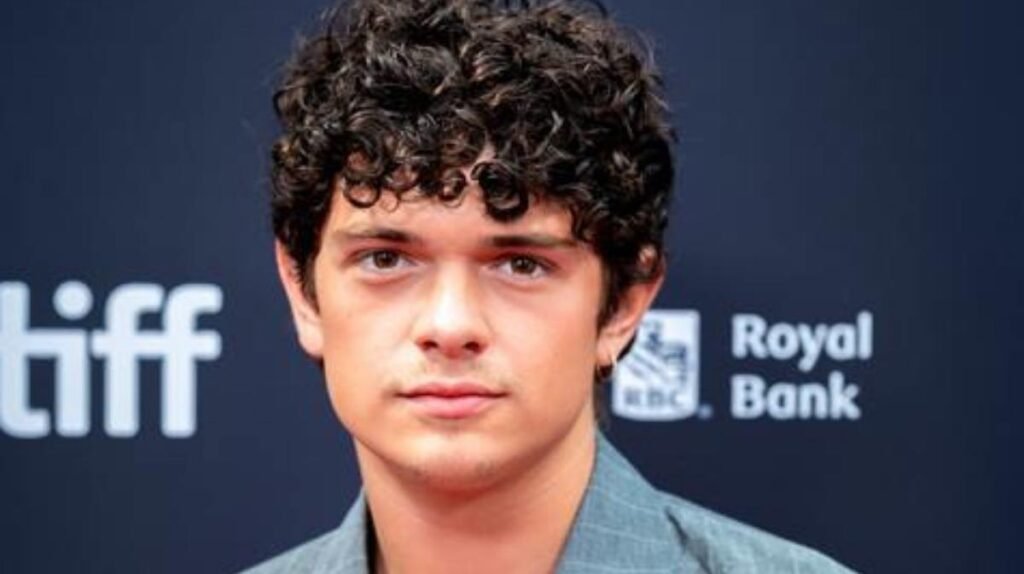
7. Noah Jupe

Noah Jupe

Biography

  • Date of birth: February 25, 2005
  • Age (2026): 21
  • Nationality: British
  • Profession: Actor

Early Life

Jupe is a British actor who broke into television as a child performer before moving into major American film productions.

Acting Debut

He gained early recognition in the TV series The Night Manager (2016) before moving into film with Suburbicon (2017) and Wonder (2017).

Career Highlights

Jupe starred in A Quiet Place (2018) and A Quiet Place Part II (2021), Ford v Ferrari (2019), and earned acclaim for Honey Boy (2019), which brought him multiple critics’ circle nominations. He’s since worked on Apple TV+ miniseries Franklin and Lady in the Lake, and made his West End stage debut in a 2026 production of Romeo and Juliet.

Awards & Nominations

Jupe received a nomination for the Independent Spirit Award for his performance in Honey Boy (2019), along with several regional critics’ association nominations.

  • Total nominations: Independent Spirit Award nod, multiple critics’ circle nominations
  • Most prestigious recognition: Featured in British Vogue’s “12 Young Creatives” (March 2021)

Net Worth (2026)

Public estimates are sparse and inconsistent; broadly reported figures put his net worth in the low single-digit millions, though this should be treated as a rough estimate given the lack of verified reporting.

Most Successful Movies

MovieYearRole
A Quiet Place Part II2021Marcus Abbott
Ford v Ferrari2019Peter Miles
A Quiet Place2018Marcus Abbott

Why He’s Popular Among Gen Z

Jupe’s filmography threads through some of the most talked-about genre and awards films of the late 2010s (A Quiet Place, Honey Boy), giving him credibility with both mainstream and indie-leaning young audiences, and his move to West End theater in 2026 signals a longer-term pivot toward serious dramatic work.

Fun Facts

  • He was featured in British Vogue’s “12 Young Creatives” list in 2021.
  • He made his West End stage debut in Romeo and Juliet in March 2026.
  • He voiced Peter in the animated film The Magician’s Elephant.
  • He starred opposite Shia LaBeouf in the semi-autobiographical Honey Boy.

Quick Profile Table

FieldDetail
Full NameNoah Casford Jupe
Date of BirthFebruary 25, 2005
Age (2026)21
NationalityBritish
Years Active2016–present
DebutThe Night Manager (2016)
Net WorthLow single-digit millions (estimated)
Awards WonIndependent Spirit Award nominee
Famous ForA Quiet Place franchise

8. Jacob Tremblay

 Jacob Tremblay

Biography

  • Date of birth: October 5, 2006
  • Age (2026): 19 (turns 20 in October 2026)
  • Nationality: Canadian
  • Profession: Actor
  • Education: Homeschooled alongside his siblings

Early Life

Born in Vancouver, British Columbia, to police detective Jason Tremblay and homemaker Christina Candia Tremblay, Jacob has two older sisters, Emma and Erica, who are also actors.

Acting Debut

Tremblay started acting at age seven, with an early voice role in The Smurfs (2013).

Career Highlights

His breakout came in Room (2015), for which he became the youngest-ever nominee for the SAG Award for Outstanding Performance by a Male Actor in a Supporting Role. He went on to star in Wonder (2017) as a boy with Treacher Collins syndrome, Good Boys (2019), and voiced Damian Wayne/Robin in HBO Max’s Harley Quinn.

Awards & Nominations

Tremblay won the Critics’ Choice Movie Award for Best Young Performer for Room and a Canadian Screen Award, alongside numerous critics’ circle honors (Austin, Chicago, San Diego, Vancouver, Washington D.C.).

  • Total wins: Critics’ Choice Movie Award, Canadian Screen Award, multiple regional critics’ awards
  • Most prestigious recognition: Youngest-ever SAG nominee in his category for Room

Net Worth (2026)

Widely cited estimates put his net worth around $2 million.

Most Successful Movies

MovieYearRole
Wonder2017Auggie Pullman
Room2015Jack Newsome
Good Boys2019Max

Why He’s Popular Among Gen Z

Tremblay’s roles in Room and Wonder made him one of the defining “emotionally mature child performer” faces of the mid-2010s for young audiences, and his shift into raunchier teen comedy (Good Boys) as he aged mirrored his own fans growing up alongside him.

Fun Facts

  • He was the youngest-ever SAG Award nominee for Outstanding Male Actor in a Supporting Role.
  • He voiced Blue Winslow in The Smurfs: The Lost Village.
  • His two older sisters are also professional actors.
  • He’s an avid Star Wars fan.

Quick Profile Table

FieldDetail
Full NameJacob Tremblay
Date of BirthOctober 5, 2006
Age (2026)19
NationalityCanadian
Years Active2013–present
DebutThe Smurfs (2013, voice)
Net Worth~$2M (estimated)
Awards WonCritics’ Choice Movie Award
Famous ForRoom; Wonder

A Note on Actors Excluded From This List

Several actors commonly labeled “Gen Z” in popular listicles were left off this list because their birth years place them before the generally accepted 1997 Gen Z start date, making them Millennials by most demographic definitions: Tom Holland (b. 1996), Anya Taylor-Joy (b. 1996), Florence Pugh (b. 1999 actually within range, though frequently grouped with an older cohort in older listicles), and KJ Apa (b. 1997  technically within range but often mislabeled due to earlier career start). If your priority is generational accuracy over marketing convention, apply the 1997–2012 cutoff strictly and cross-check each actor’s birth year before publishing.

Zendaya is a borderline Millennial/Gen Z case (born 1996); included due to overwhelming pop-culture consensus.

FAQ

Q1: Who is considered the richest Gen Z actor? 

Among the actors in this list, Zendaya has the highest estimated net worth (roughly $30–40 million), though her 1996 birth year places her on the boundary between Millennial and Gen Z. Among unambiguously Gen Z actors (born 1997+), Millie Bobby Brown has the highest publicly estimated net worth.

Q2: What years count as Gen Z? 

Usually, Gen Z is defined as people born between 1997 and 2012, based on Pew Research Center’s widely used generational framework. Some marketing and entertainment sources loosely extend the start to 1995 or 1996, which is why actors like Zendaya and Tom Holland get inconsistently labeled.

Q3: Is Zendaya actually a Gen Z actor? 

Usually she’s marketed as one, but strictly by birth year (September 1996), she sits right on the Pew Research cutoff and is classified as a Millennial by some sources. Her Gen Z branding comes more from cultural association than a strict demographic definition.

Q4: Who is the youngest award-winning Gen Z actor?

Helena Zengel holds this distinction — she became the youngest-ever winner of the German Film Award (Lola) for Best Leading Actress in 2019, at age 10, for System Crasher.

June 27, 2026 0 comments
0 FacebookTwitterPinterestEmail
The Future of Housing Market for Gen Z in 2026 - v
Career & Freelance

The Future of Housing Market for Gen Z in 2026

by Sebastian Vane June 19, 2026
written by Sebastian Vane

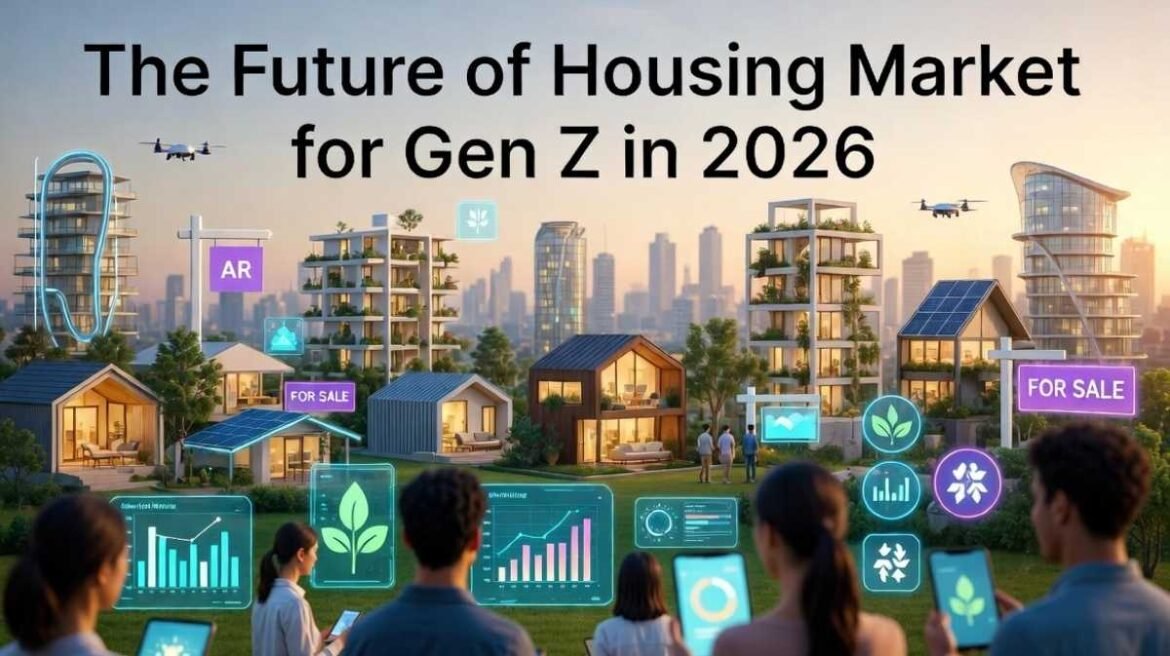
The housing market in 2026 is going through a clear transformation, and Gen Z is one of the most affected generations. Property prices continue to rise in many regions, while income growth remains slower in comparison. Because of this gap, homeownership is becoming more difficult for young people, especially those just starting their careers. Instead of rushing into buying homes, Gen Z is focusing more on financial stability, flexible living, and long-term planning.

This shift is slowly changing the structure of the housing market itself. Demand patterns, rental behavior, and even property development strategies are adapting to this new generation’s lifestyle and financial reality.

Current Housing Market Situation in 2026

Current Housing Market Situation in 2026 - Housing Market for Gen Z in 2026

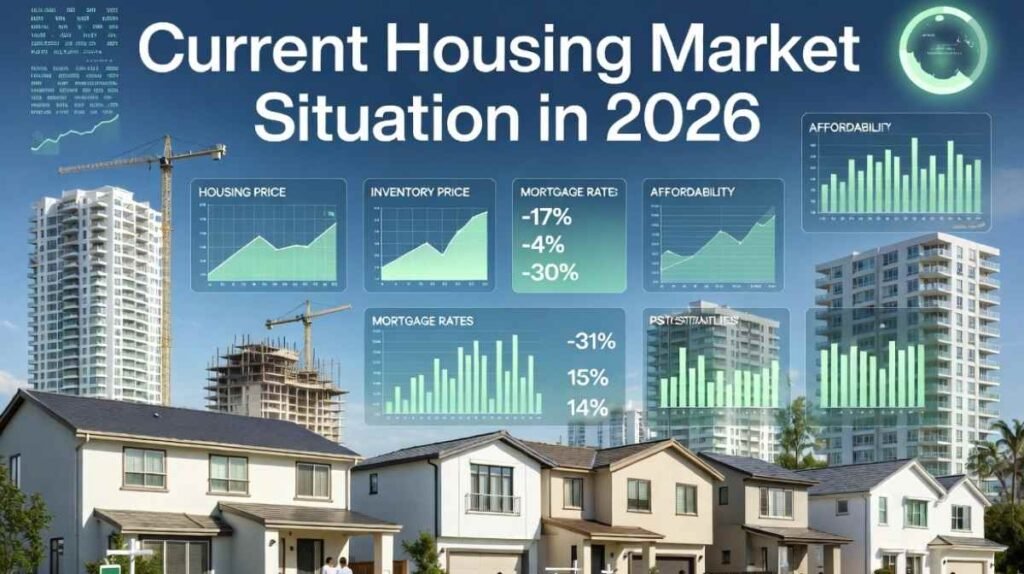
In 2026, the housing market is shaped by high demand and limited supply in most urban areas. Cities are expanding, populations are growing, and more people are moving toward urban centers for education and work opportunities. This has created strong pressure on housing availability.

At the same time, inflation and rising construction costs are pushing property prices even higher. For Gen Z, this means entering a market where even starter homes require long-term savings and strong financial discipline.

Also Read : Best Online Internships for Gen Z Career Growth in 2026

Why Gen Z Faces Housing Challenges

Why Gen Z Faces Housing Challenges - Housing Market for Gen Z

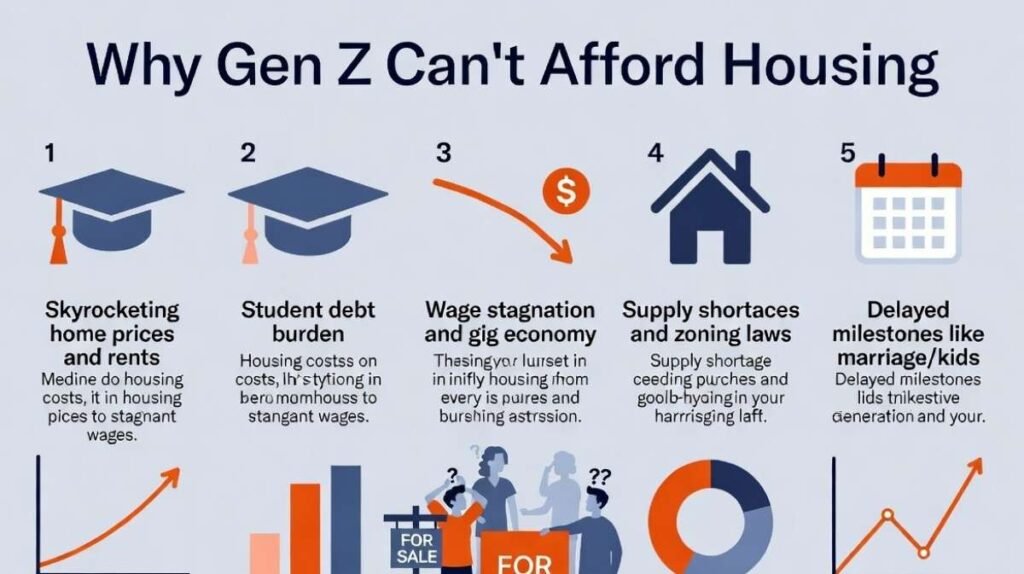
Gen Z is facing multiple financial pressures at the same time. The biggest issue is the gap between income and property prices. Salaries are increasing slowly, but housing costs are rising much faster. On top of that, student loans, rent expenses, and daily living costs reduce the ability to save.

Another challenge is strict mortgage approval requirements. Lenders usually expect strong credit history, stable income, and large down payments. Many young buyers do not meet these conditions early in their careers, which delays homeownership naturally.

Gen Z Housing Behavior Shift (2026 Trend)

Gen Z is not rejecting homeownership, but they are delaying it. Their lifestyle is more flexible compared to previous generations. Many prefer renting because it allows them to move freely for job opportunities or personal growth.

This generation also values experiences, travel, and career mobility more than early financial commitments. As a result, renting becomes a practical choice, while buying a home remains a long-term goal.

Housing Market Comparison Table (2026)

FactorGen Z Trend (2026)Previous Generations
Home Buying AgeLate 20s to 30s+Early to mid 20s
Preferred LivingRenting & co-livingHomeownership
Financial PrioritySavings & flexibilityAsset building early
Job MobilityHighLow to moderate
Housing TypeSmaller, affordable unitsLarger family homes
Decision ApproachDigital & research-basedTraditional buying process

Role of Technology in Housing Market

Role of Technology in Housing Market

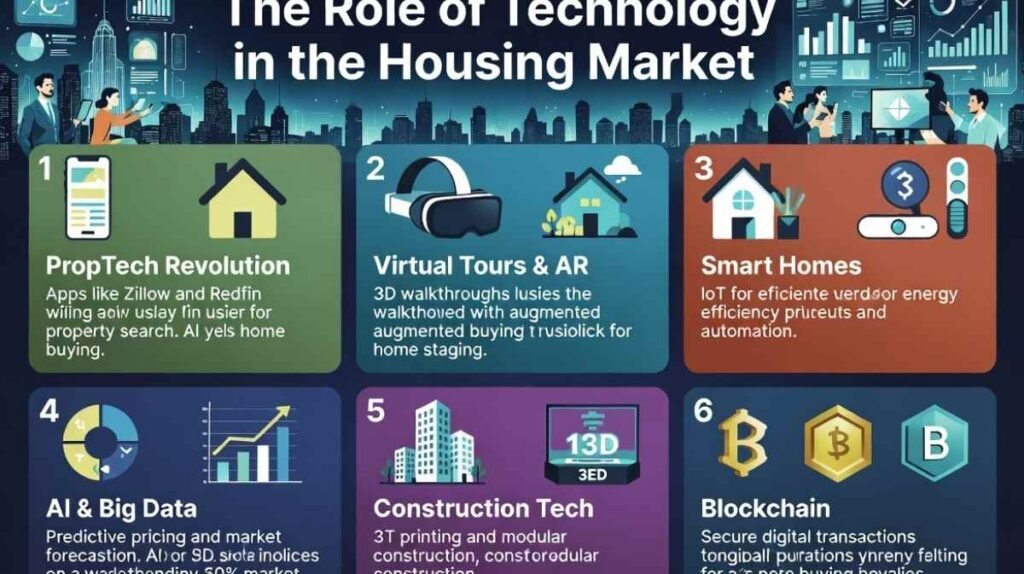
Technology is becoming a major part of real estate in 2026. Property searches, virtual tours, price comparisons, and even mortgage applications are now available online. This reduces time and increases transparency in the buying process.

Gen Z is benefiting the most from these changes because they are already comfortable using digital platforms. AI tools are also helping buyers understand property value trends, which improves decision-making and reduces risk.

Renting vs Buying Reality in 2026

Renting has become a long-term lifestyle choice for many Gen Z individuals. It offers flexibility, lower financial pressure, and freedom to relocate. Buying, on the other hand, is still seen as a stable long-term investment but requires stronger financial preparation.

This shift is not permanent rejection of ownership—it is a delay based on economic conditions. As incomes grow and financial stability improves, many Gen Z individuals are expected to transition into homeownership later in life.

Economic Pressure and Inflation Impact on Gen Z Housing

Economic Pressure and Inflation Impact on Gen Z Housing

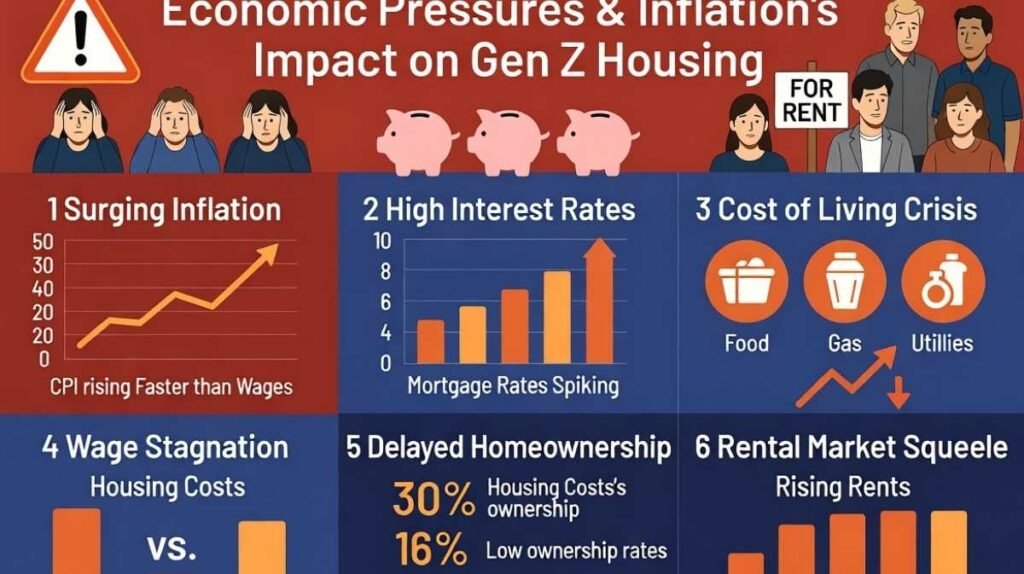
One of the strongest reasons behind the housing struggle in 2026 is continuous economic pressure. Inflation has increased the cost of almost everything, including food, transport, education, and construction materials. When living costs rise, saving money for a house becomes more difficult, especially for young people at the beginning of their careers.

At the same time, housing demand is still high in cities, which keeps prices elevated. Even when interest rates fluctuate, overall affordability does not improve much for Gen Z. This combination of rising expenses and slow income growth creates a long-term barrier to early homeownership.

Smart Housing Alternatives Emerging for Gen Z

Smart Housing Alternatives Emerging for Gen Z

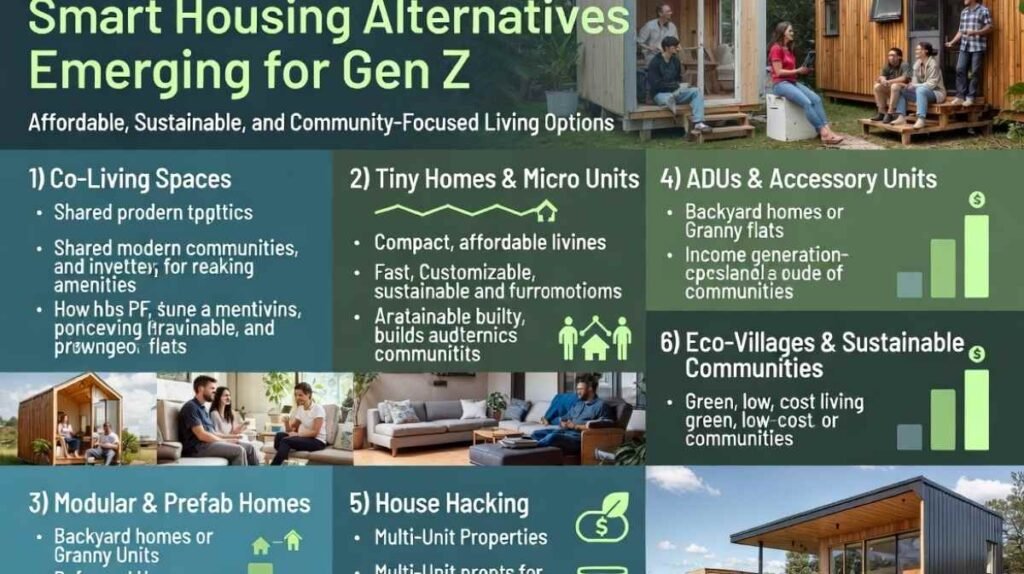
As traditional homeownership becomes harder, new housing alternatives are becoming more popular in 2026. Co-living spaces, shared apartments, and rental-based communities are growing in major cities. These options offer lower costs and more flexibility compared to buying a full property.

Another emerging trend is rent-to-own models, where individuals can gradually move from renting to ownership over time. This system helps Gen Z enter the property market in smaller financial steps instead of a large upfront investment.

Developers are also focusing on compact smart homes designed for efficiency rather than size. These homes use space-saving designs and technology integration to reduce costs while maintaining comfort.

Future Outlook of Housing Market for Gen Z

The housing market is slowly adapting to new demand patterns. Developers are focusing more on affordable housing, compact apartments, and shared living models. Urban planning is also changing to support smaller, more efficient housing structures.

Digital transformation will continue to shape the market. From AI-based pricing tools to online mortgage systems, the entire process is becoming faster and more transparent. This will make housing more accessible in the long run.

Conclusion

The housing market in 2026 presents both challenges and opportunities for Gen Z. While affordability remains a major issue, changing lifestyle preferences and technological advancements are reshaping the entire system. Gen Z is not being excluded from homeownership—they are simply entering it at a different time and in a different way.

With better financial planning and evolving market structures, homeownership will still be achievable, but through more flexible and modern paths than in the past.

June 19, 2026 0 comments
0 FacebookTwitterPinterestEmail
Gen Z Looks Older Than Its Age (1)
Gen Z Trends

Why Do Some People Think Gen Z Looks Older Than Its Age? 

by Sebastian Vane June 3, 2026
written by Sebastian Vane

Many people have started asking the same question online: Why does Gen Z look older? The discussion appears regularly across social media platforms, forums, and video comment sections where users compare photos of Gen Z with previous generations at the same age. While some people believe younger adults today appear older than Millennials or Gen X did in their twenties, the answer is more complicated than simply looking older. Social media, makeup trends, fashion choices, photography, beauty standards, and lifestyle habits all play a role in shaping how age is perceived.

The reality is that appearance is influenced by far more than biological age. In many cases, people may not actually look older, but they present themselves differently than previous generations did.

Does Gen Z Actually Look Older Than Previous Generations?

Does Gen Z Actually Look Older Than Previous Generations?

Not necessarily.

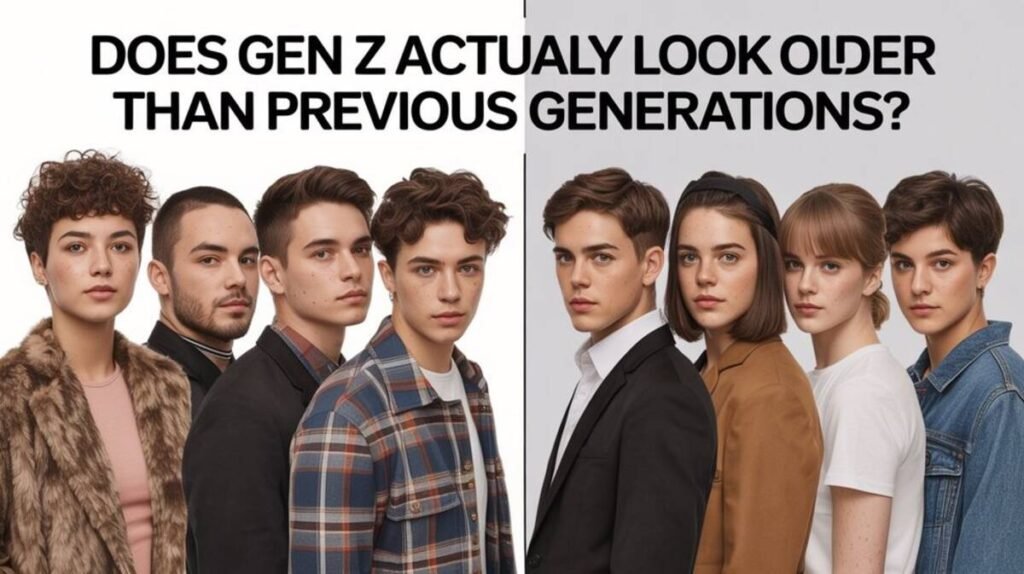
There is currently no clear evidence showing that Gen Z ages faster than previous generations. What many people notice is a difference in styling, grooming, and presentation rather than actual aging.

When people compare photos from different decades, they are often comparing very different beauty trends. A 22-year-old in 2026 may wear makeup, clothing, and hairstyles that create a more polished or mature appearance than someone of the same age twenty years ago.
Read this Artcle: Country Life of Gen Z

How Social Media Changed Age Perception

How Social Media Changed Age Perception

Social media has dramatically changed how people present themselves online.

Platforms such as TikTok, Instagram, and YouTube encourage users to share highly curated images and videos. Professional lighting, filters, editing tools, and carefully selected angles can create a more mature appearance than everyday life.

Many viral comparisons use influencer photos rather than normal, unedited images. As a result, people may be comparing online personas rather than actual appearances.

Are Makeup Trends Making Gen Z Look Older?

Modern makeup trends are often mentioned in discussions about age perception.

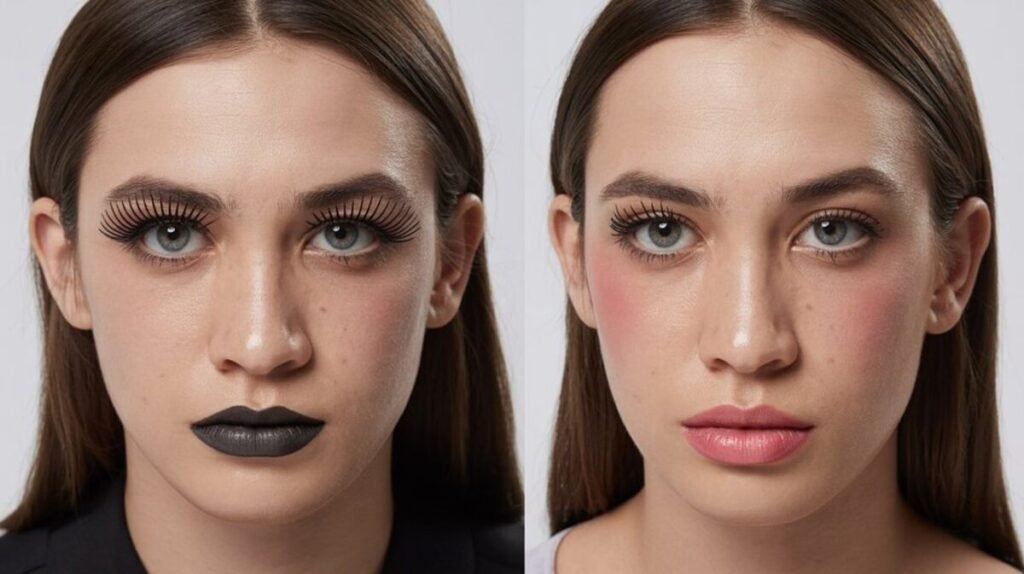
Heavy contouring, full-coverage foundation, dramatic brows, and advanced beauty techniques can create a more defined facial structure. These styles often resemble makeup looks that were once associated with older adults.

In contrast, previous generations frequently used lighter makeup styles during their teenage and early adult years. This difference can influence how people judge age when comparing generations.

How Fashion Trends Influence Appearance

How Fashion Trends Influence Appearance

Fashion has always affected how old or young someone appears.

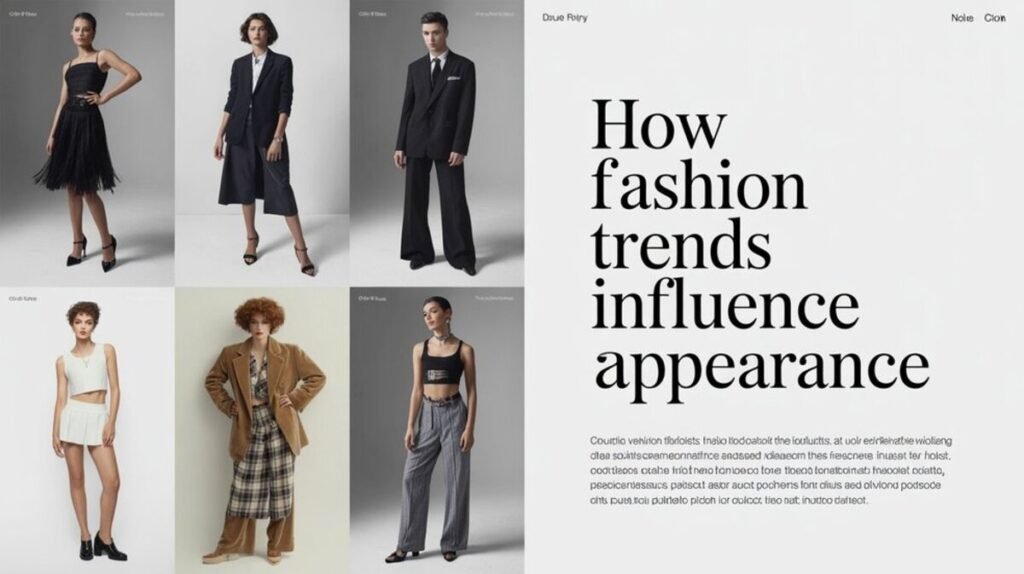
Many Gen Z fashion trends include tailored clothing, minimalist aesthetics, business-casual styles, and vintage-inspired outfits. Some of these styles naturally create a more mature impression than casual youth-focused fashion trends from previous decades.

Clothing choices do not change someone’s age, but they can change how others perceive it.

Do Filters and Photo Editing Affect How We Judge Age?

Yes, often more than people realize.

Filters can sharpen facial features, smooth skin, alter proportions, and create dramatic visual effects. Some editing styles may unintentionally make users appear older, while others can make them appear younger.

When viewers spend hours looking at edited content online, their expectations about what people should look like can change significantly.

Can Stress and Lifestyle Affect Appearance?

Lifestyle factors can influence overall appearance.

Sleep quality, stress levels, hydration, nutrition, and screen time all affect how healthy and rested someone looks. While these factors do not automatically make Gen Z appear older, they can contribute to visible differences in skin quality and energy levels.

Like every generation, individuals experience these factors differently.

Why Millennials and Gen Z Are Often Compared

Millennials and Gen Z are frequently compared because they grew up during different stages of the internet era.

Millennials spent much of their teenage years before social media became dominant. Gen Z, however, grew up with smartphones, influencers, filters, and constant online visibility.

This difference has created distinct beauty standards and presentation styles that influence how each generation is perceived.

My Observation While Looking Into This Discussion

While researching this topic, one thing stood out repeatedly. Most people making comparisons were using carefully selected online photos rather than everyday real-life interactions.

I noticed that many side-by-side comparisons featured influencer images, celebrity photos, or heavily edited social media content. However, when people shared candid photos from school, family events, or public settings, the differences often seemed much smaller than online debates suggested.

That observation made me realize that perception plays a huge role in this discussion. In many cases, people are not necessarily seeing older faces. They are seeing different beauty standards, styling choices, and presentation habits than previous generations used at the same age.

Why Beauty Standards Have Changed

Beauty standards evolve over time.

Today, younger adults have access to skincare advice, makeup tutorials, fashion influencers, and cosmetic information that previous generations never experienced at the same scale.

As a result, many Gen Z individuals adopt sophisticated beauty routines much earlier than people did in previous decades. This can sometimes create an appearance that viewers associate with greater maturity.

So, Does Gen Z Really Look Older?

The answer depends largely on perception.

Most experts would agree that social media, beauty trends, fashion choices, and online culture play major roles in shaping how age is perceived today. While some individuals may appear older because of styling decisions, there is little evidence suggesting that Gen Z as a whole is physically aging faster than previous generations.

In many cases, people are comparing different cultural trends rather than actual biological age.

Frequently Asked Questions

Why do people say Gen Z looks older?

Many people believe Gen Z looks older because of makeup trends, social media presentation, mature fashion styles, and changing beauty standards.

Does makeup make Gen Z appear older?

Certain makeup techniques can create a more mature appearance, particularly contouring, full-coverage foundation, and dramatic styling.

Do social media filters affect age perception?

Yes. Filters and editing tools can significantly change how people appear online, which may influence how viewers judge age.

Does Gen Z age faster than Millennials?

There is no strong evidence suggesting that Gen Z ages faster than Millennials. Most differences appear related to styling and presentation.

Why are Millennials and Gen Z compared so often?

Both generations grew up during different stages of digital culture, making their appearance trends and beauty standards easy to compare.

June 3, 2026 0 comments
0 FacebookTwitterPinterestEmail
Best Online Internships for Genz
The Job Hunt

Best Online Internships for Gen Z Career Growth in 2026

by Sebastian Vane May 22, 2026
written by Sebastian Vane

Best online internships for Gen Z career growth help students and beginners gain practical experience while working remotely. Many young professionals now prefer online internships because they offer flexible schedules, digital skill development, networking opportunities, and real-world projects without requiring relocation. Remote internships also help Gen Z build portfolios, improve communication skills, and understand modern online work environments before applying for full-time jobs later.

I originally thought online internships would feel less serious compared to office internships. But after joining my first remote content project during college, I quickly realized how much real experience came from handling deadlines, joining online meetings, and working with teams remotely. That experience honestly improved my confidence far more than expected.

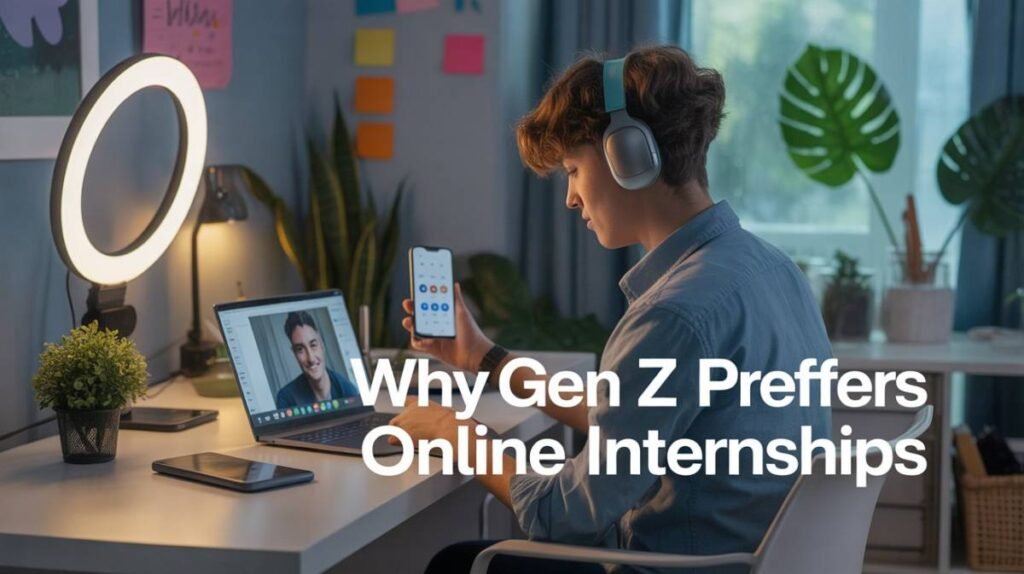
Why Gen Z Prefers Online Internships

Why Gen Z Prefers Online Internships

Many Gen Z students prefer online internships because modern work culture already revolves around digital communication and flexible work environments.

Remote internships help students:

  • work from home
  • save transportation costs
  • balance university schedules
  • build experience earlier
  • learn modern digital tools
  • explore career interests

For many students, flexibility becomes one of the biggest advantages.

Instead of spending hours commuting, students can focus more on:

  • learning practical skills
  • building portfolios
  • improving resumes
  • networking online

This flexibility makes remote internships feel more realistic for modern lifestyles.

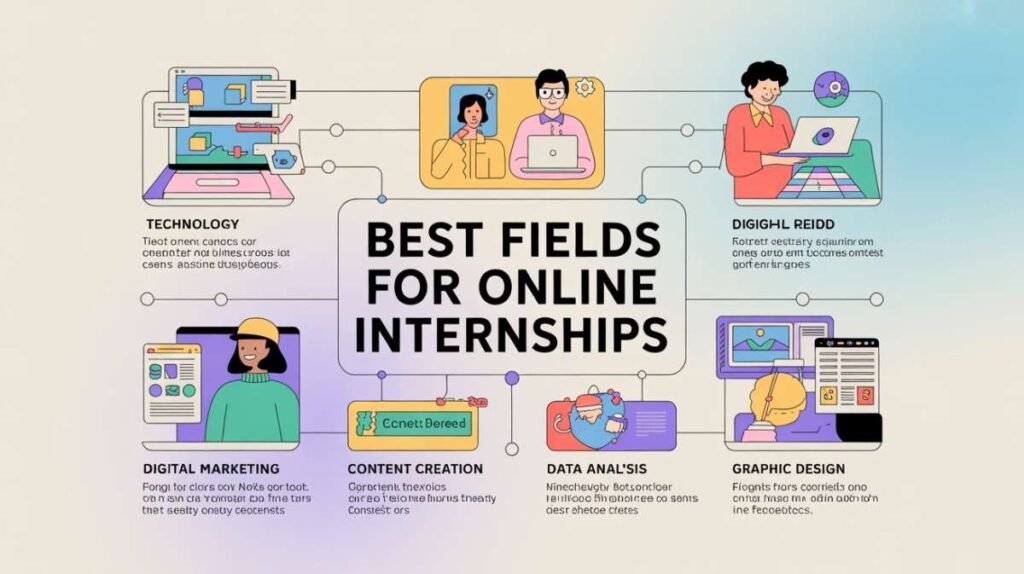
Best Fields for Online Internships

Best Fields for Online Internships

Some career fields work especially well in remote environments because most tasks already happen digitally.

Popular online internship fields include:

  • digital marketing
  • content writing
  • graphic design
  • software development
  • business analysis
  • social media management
  • SEO
  • video editing
  • data analysis

Digital marketing internships remain especially popular because students can learn:

  • social media campaigns
  • content strategy
  • keyword research
  • analytics
  • advertising basics

Writing internships also help beginners improve communication skills while building real portfolio work.

One thing I personally noticed during remote content projects was how quickly consistent writing improved professional communication and research abilities.

Best Platforms to Find Remote Internships

Best Platforms to Find Remote Internships

Several online platforms now focus heavily on remote internships and virtual work opportunities.

Popular platforms include:

  • LinkedIn
  • Internshala
  • Forage
  • Coursera

Large companies like:

  • Google Careers
  • Microsoft Careers

also offer online learning programs, internships, and career development opportunities for students.

Many beginners start by applying for smaller internships first before targeting highly competitive global programs.

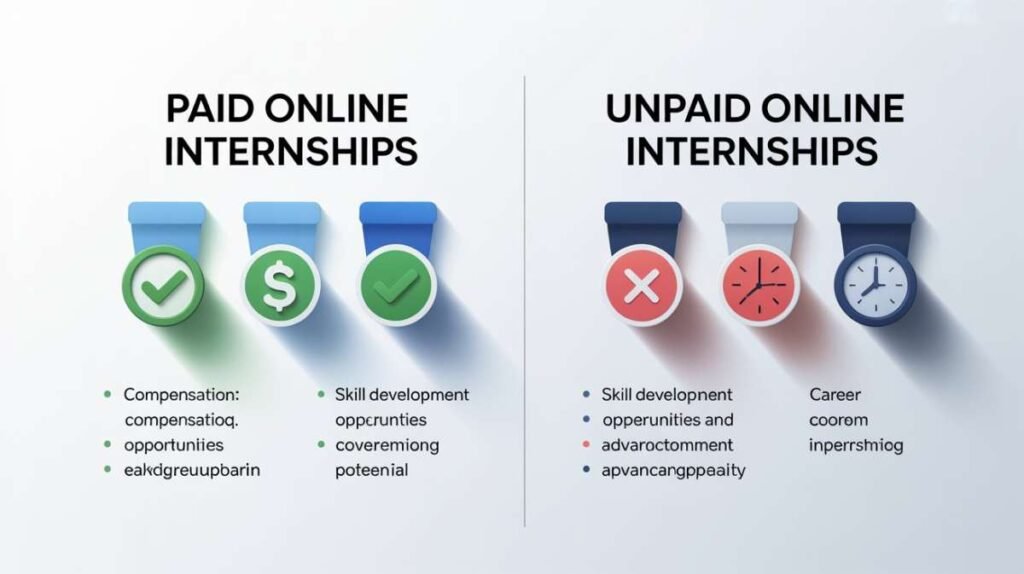
Paid vs Unpaid Online Internships

Paid vs Unpaid Online Internships

Students often wonder whether unpaid internships are worth accepting.

The answer depends on:

  • mentorship quality
  • skill development
  • portfolio opportunities
  • networking value
  • practical experience

Some unpaid internships unfortunately involve repetitive tasks with very little learning value. Others provide real mentorship and strong projects that later help students secure paid jobs or freelance work.

A strong internship should help students:

  • build confidence
  • improve practical skills
  • gain portfolio projects
  • understand remote teamwork
  • develop professional communication

rather than simply handing out certificates.

Can Online Internships Actually Help Your Career?

Can Online Internships Actually Help Your Career?

Yes, online internships can genuinely help career growth when the work feels practical and skill-focused.

Many employers now value:

  • real project experience
  • communication skills
  • portfolio quality
  • adaptability
  • remote collaboration

more than traditional office attendance alone.

Remote internships also help students understand how modern digital workplaces function daily.

Students often improve:

  • time management
  • self-discipline
  • collaboration
  • organization
  • online professionalism

These skills remain useful across many industries.

Skills Gen Z Gains From Remote Internships

Online internships often teach important soft skills alongside technical work.

Students commonly improve:

  • communication confidence
  • teamwork
  • digital organization
  • deadline management
  • problem-solving
  • independent work habits

During my first remote internship, I remember feeling uncomfortable speaking during video meetings because online communication felt awkward at first. Over time, regular collaboration naturally improved confidence and made professional conversations much easier.

That experience later helped during interviews and freelance client meetings too.

Why Some Online Internships Feel Useless

Not every internship provides meaningful experience.

Some internships become frustrating because they offer:

  • unclear responsibilities
  • repetitive admin tasks
  • no mentorship
  • unrealistic workloads
  • little skill development

Students should look for internships that actively involve:

  • real projects
  • collaboration
  • feedback
  • portfolio building
  • practical learning

These opportunities create much stronger long-term career benefits.

How to Make Internship Experience Look Strong on a Resume

Many students only list internship titles without explaining actual achievements.

A stronger resume focuses on:

  • projects completed
  • tools used
  • measurable results
  • campaign performance
  • teamwork experience
  • technical skills learned

For example:
instead of writing:
“Marketing Intern”

students can explain:

  • managed social media content
  • researched SEO keywords
  • improved engagement rates
  • collaborated remotely with teams

Specific achievements feel more professional and credible.

3 Best Websites to Find Internships in 2026 (+ How I Applied to 400 and Landed Offers) 

When I was searching for internships I was on LinkedIn, Indeed, Handshake. All of them.

Every time I clicked a posting there were already 100, 200, sometimes 1,000 applicants and it had literally just gone live. I know now it was bots but at the time I was losing my mind.

Here’s what actually worked.

1. Jobright.ai

This should be your first stop. They have a master list that is clean, organized, and has more postings than most places you’ll find. You can save searches and set alerts so new postings come to you.

100% free with some premium options. I still use it now for new grad roles and it genuinely slaps.

2. GitHub’s Internship List

There’s a GitHub repo that hand-picks internship openings from notable companies every year. It overlaps a little with Jobright but it’s more curated and brand-name focused.

If you’re targeting recognizable companies, this list is for you.

3. Handshake (seriously underrated)

This is my favorite and nobody talks about it enough. Log in through your school’s career portal. The internships on here are specifically looking for university students, not open to just anyone on the internet.

Source: Reddit

My Real Remote Internship Experience

One moment I still remember clearly happened during an early remote internship meeting. I joined a group video call expecting a simple discussion, but suddenly I was asked to explain project ideas in front of several team members. At first I honestly felt nervous because remote communication felt unfamiliar compared to classroom discussions.

After that meeting, I started improving how I presented ideas professionally online. Within a few months, video meetings felt much more natural instead of intimidating.

That experience completely changed how I viewed remote internships. I realized the biggest value was not only technical work but learning how modern online workplaces actually operate.

Final Thoughts

The best online internships for Gen Z career growth offer far more than temporary experience. They help students build practical skills, confidence, communication abilities, and professional connections while adapting to modern remote work culture.

Even smaller internships can create long-term opportunities when the experience focuses on meaningful work, skill development, and real collaboration rather than repetitive busywork alone.

best online internships for gen z career growth yr meir bat sunb pints na ue dkro pragraph ho zayda atar arxle o he;pfull ho meri user ka lia

Frequently Asked Questions

Are online internships worth it for Gen Z students?

Online internships can help Gen Z students build practical skills, improve resumes, and gain real-world experience while studying or working remotely.

Can beginners apply for online internships without experience?

Yes, many online internships accept beginners who have strong communication skills, willingness to learn, and basic knowledge related to the field.

Which online internships are best for career growth?

Digital marketing, software development, graphic design, content writing, business analysis, and social media internships are among the most popular choices for long-term career growth.

Do online internships help with remote jobs later?

Remote internships often help students understand online teamwork, digital communication, and project management, which are useful skills for future remote jobs.

May 22, 2026 0 comments
0 FacebookTwitterPinterestEmail
Country Life of Gen Z Why Young Adults Want a Different Lifestyle Today - Country Life of Gen Z
Gen Z Trends

Country Life of Gen Z: Why Young Adults Want a Different Lifestyle Today

by Sebastian Vane May 16, 2026
written by Sebastian Vane

Generation Z is changing the way people think about success, lifestyle, and personal happiness. Unlike older generations that often focused heavily on traditional careers, busy city life, and long-term corporate routines, many Gen Z adults are now searching for balance, flexibility, and a healthier way of living. This shift has created growing interest in what many people call the country life” lifestyle a slower, calmer, and more affordable way of living compared to fast-paced urban environments.

For many young adults, modern success is no longer only connected to luxury apartments, crowded cities, or stressful office schedules. Instead, Gen Z is becoming more interested in peaceful surroundings, flexible work opportunities, affordable living, mental well-being, and stronger work-life balance. Social media, remote work, and rising living costs have all influenced how younger generations think about where and how they want to live.

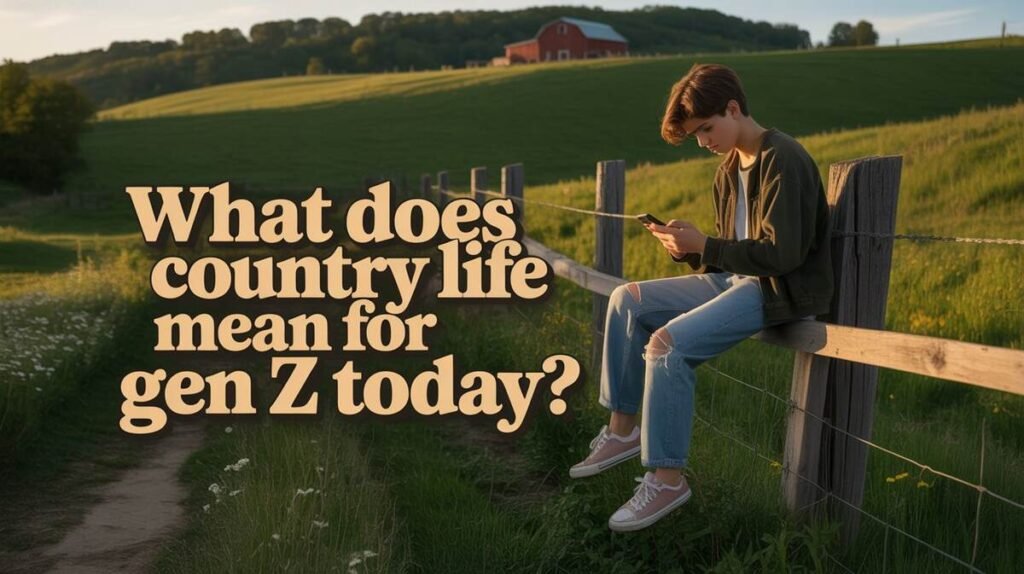
What Does Country Life Mean for Gen Z Today?

What Does Country Life Mean for Gen Z Today? - Country Life of Gen Z

For Gen Z, country life does not always mean living on farms or moving far away from technology. In many cases, it represents a lifestyle focused on balance, comfort, flexibility, and mental peace. Younger adults are increasingly drawn toward environments that feel less stressful and more supportive of personal well-being.

Country life for Gen Z often includes slower routines, remote work flexibility, outdoor living, and lower living expenses compared to expensive urban areas. Many young adults are also becoming more interested in creating healthier daily habits, spending more time in nature, and reducing the pressure that often comes with crowded city lifestyles.

Why Many Gen Z Adults Are Moving Away from Traditional City Life

One of the biggest reasons many Gen Z adults are reconsidering city life is the rising cost of living. Expensive rent, transportation costs, and financial pressure can make large cities feel overwhelming for younger people trying to build stable careers or independent lifestyles.

Mental health is another major factor influencing these decisions. Many Gen Z individuals openly discuss burnout, stress, anxiety, and social pressure more than previous generations did. Fast-paced environments combined with online comparison culture have pushed many young adults to prioritize calmer and healthier lifestyles.

Social media has played a role as well. Platforms like TikTok, Instagram, and YouTube regularly showcase slower lifestyles, cozy homes, digital nomad routines, and peaceful living environments. These trends continue influencing how younger generations imagine their future lifestyles.

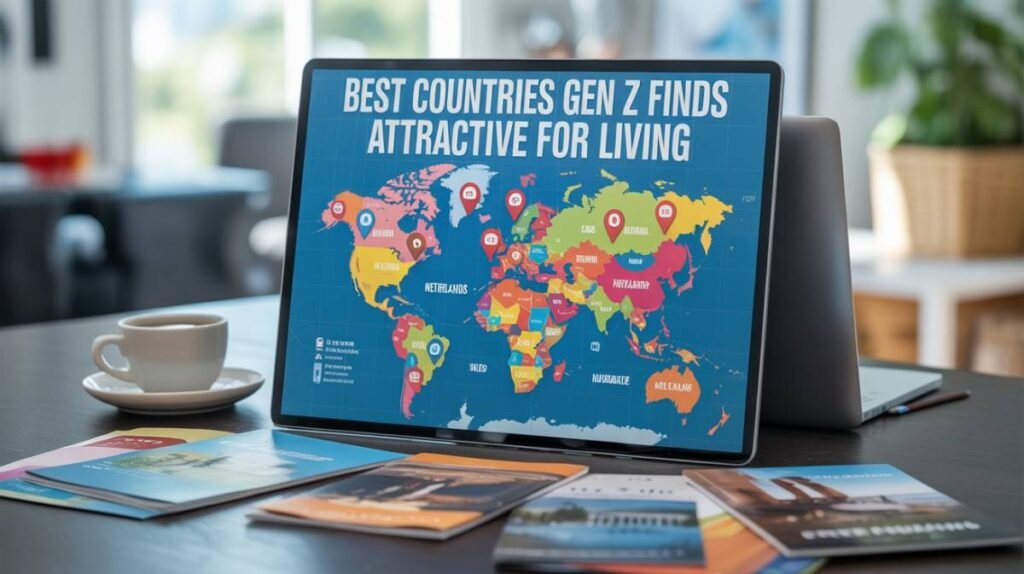
Best Countries Gen Z Finds Attractive for Living

Different countries attract Gen Z for different reasons, including affordability, career opportunities, healthcare, safety, and quality of life.

Portugal

Portugal has become popular among younger adults because of its relaxed atmosphere, warm climate, and growing digital nomad community. Many Gen Z travelers and remote workers appreciate the balance between modern city life and peaceful coastal living.

Canada

Canada attracts many young adults because of its multicultural environment, education opportunities, and focus on quality of life. Many Gen Z individuals also view Canada as a place with strong healthcare systems and safer communities.

Netherlands

The Netherlands is often praised for work-life balance, cycling culture, and modern urban planning. Younger adults interested in sustainable lifestyles and flexible living environments often find the country appealing.

Australia

Australia continues to attract younger generations because of its outdoor lifestyle, beaches, and relaxed social culture. Many Gen Z adults are drawn to the balance between career opportunities and recreational living.

Japan

Japan attracts Gen Z for very different reasons, including technology, culture, creativity, fashion, and modern city experiences. While Japan is known for busy urban environments, many young adults are also becoming interested in quieter regional areas and countryside experiences within the country.

What Is Gen Z’s Biggest Issue Today?

Although Gen Z is often described as highly connected and digitally advanced, many young adults face serious challenges that affect daily life and future planning.

Financial pressure remains one of the biggest concerns. Rising housing costs, inflation, unstable job markets, and student debt have made financial independence more difficult for many younger adults around the world.

Mental health is another major issue frequently discussed by Gen Z. Constant online exposure, social comparison, career uncertainty, and pressure to succeed can negatively affect emotional well-being. Many younger adults are now prioritizing mental health support and healthier lifestyle choices more openly than previous generations.

Where Do Most Gen Z Want to Live?

Many Gen Z adults prefer places that offer a combination of affordability, safety, internet access, flexibility, and quality of life. Instead of focusing only on major business cities, younger adults are increasingly interested in locations that support healthier routines and better work-life balance.

Some Gen Z individuals still enjoy busy urban environments filled with entertainment and networking opportunities. However, many others now prefer smaller cities, suburban communities, or peaceful locations where living expenses feel more manageable..

How Social Media Influences Gen Z Lifestyle Choices

Social media continues shaping how Gen Z views success, travel, careers, relationships, and lifestyle goals. Platforms filled with productivity routines, cozy homes, travel experiences, and self-improvement content strongly influence younger audiences.

While social media can inspire creativity and motivation, it can also create unrealistic expectations and comparison pressure. Many Gen Z adults are becoming more aware of this balance and trying to build lifestyles that feel authentic instead of constantly chasing online trends.

This is one reason slower living, wellness culture, and country-style lifestyles continue gaining popularity among younger generations.

Final Thoughts

The idea of success is changing for younger generations around the world. For many Gen Z adults, happiness is no longer only connected to busy careers or expensive city lifestyles. Instead, balance, mental peace, flexibility, affordability, and personal freedom are becoming increasingly important priorities.

Country life and slower living trends reflect a larger shift in how younger adults view the future. Whether through remote work, digital lifestyles, or interest in quieter communities, Gen Z continues redefining what modern living looks like in today’s world.

Frequently Asked Questions

What are the best countries for Gen Z?

Countries like Canada, Portugal, Australia, the Netherlands, and Japan are often considered attractive to Gen Z because of lifestyle quality, career opportunities, safety, and modern living environments.

Are Gen Z adults over 21 now?

Yes, many Gen Z individuals are now in their early twenties and mid-twenties, while younger members of the generation are still teenagers.

What is Gen Z’s biggest issue?

Financial stress, mental health concerns, career uncertainty, and rising living costs are some of the biggest challenges affecting Gen Z today.

Where do most Gen Z want to live?

Many Gen Z adults prefer affordable, flexible, and peaceful places that support better work-life balance and personal well-being.

May 16, 2026 0 comments
0 FacebookTwitterPinterestEmail
What Careers Are Gen Z Most Interested In Top Career Trends Shaping 2026 - What Careers Are Gen Z Most Interested In
Career & Freelance

What Careers Are Gen Z Most Interested In? Top Career Trends Shaping 2026

by Sebastian Vane May 13, 2026
written by Sebastian Vane

Many young workers no longer chase careers the same way previous generations once did. High-paying office jobs still matter of course. However something bigger quietly changed during the last few years. Burnout layoffs, rising living costs and nonstop digital culture completely reshaped how Gen Z now views success stability and long-term work life.

At the same time social media remote work and online businesses opened career paths that barely existed before. Suddenly younger workers started valuing freedom, flexibility and personal balance differently than older generations. That shift explains why Gen Z career trends now look dramatically different from traditional workplace expectations.

Why Gen Z Career Choices Feel So Different Today

Career expectations changed rapidly once technology, social media and remote work became part of everyday life. Gen Z grew up online which means they discovered alternative career paths earlier than previous generations ever could. Watching creators, freelancers and startup founders build income independently completely shifted how younger workers now define professional success.

Economic uncertainty also played a major role. Many Gen Z workers watched industries struggle during inflation layoffs and global instability while older generations faced burnout after years inside demanding office environments. That reality pushed younger workers toward careers offering adaptability, skill growth and stronger work-life balance instead of chasing job titles alone.

Technology Changed Career Expectations Completely

Technology opened career paths that barely existed a decade ago. Young workers now see opportunities inside artificial intelligence cybersecurity content creation digital marketing and online business development almost every day through social media and online communities. Those industries feel faster, more flexible and often more financially rewarding compared with traditional corporate career structures.

Many students also realize degrees alone no longer guarantee stable employment automatically. Skills portfolios and online presence now influence hiring decisions heavily across modern industries. That shift explains why Gen Z spends so much time learning digital tools, freelancing skills and personal branding techniques while preparing for future career opportunities online.

Why Work-Life Balance Matters More Than Job Titles

Older generations often measured success through promotions, office status and long-term corporate loyalty. Gen Z approaches work differently because many young professionals value personal time flexibility and mental health far more aggressively. Some workers would rather earn slightly less money if the career allows healthier routines and better emotional balance overall.

Remote work changed expectations permanently too. Once workers experienced flexible schedules and location freedom many stopped viewing daily office commutes as necessary for productivity. That shift explains why hybrid jobs, freelance careers and remote-first companies attract younger workers much faster than rigid workplace environments demanding constant physical office presence every single day.

Most Popular Career Choices Among Gen Z Today 

Career interests among Gen Z continue evolving quickly because technology and economic trends change constantly. However certain industries consistently attract younger workers searching for flexibility, strong income growth and future-proof opportunities. Many of these careers combine digital skills, creativity and independence which aligns closely with how Gen Z now views professional success.

The strongest career trends usually connect with industries expected to grow during the next decade. Artificial intelligence healthcare digital media and online business continue attracting huge attention because younger workers see long-term demand inside those fields. Stability matters more today especially as automation and economic uncertainty continue reshaping modern employment patterns globally.

Technology and AI Careers

Artificial intelligence careers exploded in popularity once companies started integrating AI tools into everyday business operations. Roles involving cybersecurity software development, data analysis and prompt engineering now attract huge interest because they offer strong salaries, career growth and future demand. Many Gen Z workers also view tech industries as more flexible compared with traditional corporate environments.

AI careers feel especially attractive because technology now influences almost every industry globally. Even workers outside software engineering increasingly learn AI-related tools to remain competitive professionally. That trend explains why younger workers continue prioritizing digital skills and tech literacy while planning future career paths during uncertain economic conditions.

Creative and Digital Careers

Creative careers once felt financially risky for many people. Social media completely changed that perception. Content creators, video editors, digital marketers and graphic designers now build real businesses online while working independently from almost anywhere. That freedom strongly appeals to Gen Z workers who value creativity, flexibility and personal control over their professional routines.

Platforms like YouTube, TikTok and Instagram also created entirely new income opportunities. Some creators earn through sponsorships, digital products or consulting work instead of relying on traditional employers permanently. That shift explains why many younger workers now see personal branding and online audiences as valuable long-term career assets rather than casual hobbies only.

Healthcare and Wellness Careers

Healthcare careers continue attracting Gen Z because demand remains extremely strong globally. However younger workers increasingly prefer areas connected with mental health wellness and emotional support instead of only traditional hospital careers. Therapy wellness coaching nursing and psychology-related fields now receive growing interest among students entering healthcare industries.

Mental health awareness also changed career priorities significantly. Many Gen Z workers want careers that feel meaningful emotionally instead of purely financially rewarding. Helping people directly through healthcare or wellness careers creates stronger personal fulfillment which explains why these industries continue growing despite stressful work environments sometimes attached to them.

Finance and Business Careers

Finance careers still attract ambitious Gen Z workers especially within fintech investment analysis and entrepreneurship. Younger professionals increasingly prefer modern finance sectors connected with technology innovation and online business growth instead of traditional banking systems that feel slower or more restrictive professionally.

Entrepreneurship also appeals strongly because many Gen Z workers value independence deeply. Starting online stores, freelance businesses or consulting brands feels more achievable today thanks to digital platforms and social media marketing opportunities. Even workers inside regular jobs often build side businesses simultaneously for additional income security and greater financial freedom long term.

Skilled Trades and Alternative Careers

Skilled trades are quietly becoming more respected among younger generations again. Electricians, mechanics, plumbing specialists and construction technology workers now benefit from strong demand, rising wages and lower competition compared with overcrowded white-collar industries struggling with automation or excessive job market saturation recently.

Many Gen Z workers also appreciate the practical stability skilled trades can provide. Some careers remain difficult to automate completely because they require physical expertise, problem solving and hands-on technical ability. That reality makes skilled trades feel surprisingly future-proof compared with certain office-based positions increasingly threatened by artificial intelligence systems.

Side Hustles and Creator Economy

Many Gen Z workers no longer depend entirely on one career path for income security. Side hustles freelancing and creator-based businesses now play massive roles in financial planning. Younger workers often combine regular jobs with online income streams through digital products freelancing affiliate marketing or social media content creation simultaneously.

This mindset developed partly from economic uncertainty and rising living costs globally. Relying on one paycheck alone sometimes feels risky now especially for younger generations facing unstable housing markets inflation and unpredictable employment trends. Multiple income streams create both financial flexibility and stronger emotional security during uncertain economic periods.

What Gen Z Wants From Careers Now

Flexibility remains one of the biggest priorities shaping Gen Z career decisions today. Younger workers increasingly prefer hybrid schedules, remote work and environments allowing personal freedom instead of rigid office structures demanding constant supervision throughout the week. Many believe productivity depends more on outcomes than physical workplace attendance.

Purpose matters deeply too. Gen Z workers often want careers aligned with personal values, social impact or emotional fulfillment instead of chasing salary alone endlessly. That does not mean younger workers ignore financial security completely. Instead many now expect careers to support both stable income and healthier long-term quality of life simultaneously.

Why AI Is Changing Career Decisions

Artificial intelligence created excitement and anxiety at the same time for younger workers entering modern job markets. Some careers now feel vulnerable because automation continues replacing repetitive tasks across industries rapidly. That fear pushed many Gen Z workers toward careers emphasizing creativity, emotional intelligence, adaptability and technical problem-solving skills difficult for AI systems to fully replace.

AI also created entirely new career opportunities unexpectedly. Prompt engineering AI consulting automation management and digital workflow optimization barely existed several years ago. Younger workers understand industries will continue evolving rapidly which explains why adaptability, learning speed and technology literacy now matter more than traditional career stability models followed historically.

Career Trends That Could Grow Fast by 2030

Technology healthcare sustainability and creator-focused industries will likely continue growing aggressively during the next decade. AI-enabled jobs, remote-first businesses and digital entrepreneurship already influence hiring trends globally while demand for emotional intelligence, communication and leadership skills continues increasing alongside automation growth.

Human-centered careers may become even more valuable in the future. As artificial intelligence handles repetitive technical work companies will likely prioritize workers capable of empathy, strategic thinking, collaboration and relationship building. That balance between technology and human connection will shape many future career opportunities for Gen Z professionals entering evolving industries.

Skills Gen Z Should Focus on Building Now

Technical knowledge matters strongly today but soft skills remain equally important long term. Communication adaptability, emotional intelligence and problem solving continue separating strong professionals from workers struggling inside rapidly changing industries. Younger workers who combine digital skills with strong human interaction abilities will likely remain highly competitive professionally.

AI literacy also becomes increasingly valuable across nearly every career sector. Workers do not necessarily need advanced programming skills however understanding automation digital workflows and AI-assisted productivity tools now creates major professional advantages. Learning continuously may become one of the most important survival skills in future job markets shaped by constant technological change.

How to Choose a Future-Proof Career

Future-proof careers usually combine long-term industry demand adaptability and continuous learning opportunities instead of relying on repetitive tasks easily automated by technology. Workers should focus on careers matching both personal strengths and market demand because sustainable motivation matters just as much as salary growth professionally.

Experimenting early also helps reduce career pressure significantly. Internships freelancing online learning and side projects allow younger workers to test industries before making long-term commitments emotionally or financially. Career paths today rarely follow perfectly straight lines anymore especially for Gen Z professionals navigating constantly evolving digital economies worldwide.

Final Thoughts

Gen Z is reshaping modern work culture faster than many industries expected. Flexibility technology, mental health and financial independence now influence career decisions just as strongly as salary or professional titles. Younger workers increasingly want careers supporting both personal freedom and long-term stability instead of repeating traditional workplace patterns causing burnout for previous generations.

The future job market will likely continue changing rapidly as artificial intelligence remote work and digital industries expand further globally. Workers who stay adaptable build modern skills and remain open to learning continuously will probably navigate those changes far more successfully. Gen Z understands that reality clearly which explains why career choices today feel dramatically different from the past.

FAQs

What do Gen Z use instead of traditional careers?

Many Gen Z workers now prefer freelancing creator businesses side hustles remote work and portfolio careers instead of relying completely on traditional long-term corporate jobs for financial stability and professional identity.

What job titles will disappear by 2030?

Repetitive administrative roles, basic data entry positions and some routine customer service jobs may decline significantly because automation and artificial intelligence continue replacing predictable tasks across industries rapidly.

Are Gen Z turning to purpose-driven careers?

Yes, many Gen Z workers increasingly prioritize meaningful work, emotional fulfillment and careers aligned with personal values instead of focusing only on salary or traditional workplace status.

May 13, 2026 0 comments
0 FacebookTwitterPinterestEmail
Gen Z Wedding Trends
Gen Z Trends

Gen Z Wedding Trends 2026: Viral Ideas Changing Modern Weddings Forever

by Sebastian Vane May 7, 2026
written by Sebastian Vane

Weddings are starting to look very different from what older generations once considered traditional. Gen Z couples are moving away from overly formal ceremonies and replacing them with celebrations that feel more personal, emotional, and experience-driven. Instead of focusing only on luxury or large guest lists, many couples now care more about authenticity, creativity, and meaningful moments.

Social media has also changed the way weddings are planned and shared. Viral aesthetics, real-time content, and personalized details now shape modern wedding culture. From intimate ceremonies to nostalgic fashion trends, Gen Z weddings are becoming less about rules and more about individuality.

Why Gen Z Weddings Feel Different

Why Gen Z Weddings Feel Different

Gen Z approaches weddings with a completely different mindset. Many couples are less interested in following long-standing traditions simply because they are expected. Instead, they want every detail to reflect their personalities, relationships, and lifestyle choices.

Budget awareness is another major factor shaping modern weddings. Rather than spending heavily on formal expectations, couples are prioritizing experiences that feel emotionally valuable. This shift has made smaller ceremonies, flexible timelines, and personalized celebrations more common than ever.

Another reason these weddings feel different is the influence of digital culture. Inspiration now comes from TikTok, Pinterest, and relatable creators instead of traditional wedding magazines. As a result, weddings feel more creative, casual, and emotionally honest.

Unique Reception Experiences Are Taking Over

 Reception Experiences Are Taking Over

Interactive Weddings Over Formal Schedules

Modern receptions are becoming more immersive and guest-focused instead of following rigid timelines. Couples are replacing long formal programs with activities that encourage interaction and create memorable experiences for everyone attending.

Live painters, custom cocktail stations, audio guestbooks, and interactive games are becoming popular additions at receptions. These experiences make guests feel involved rather than simply watching events unfold from their tables.

Many couples are also designing receptions that feel more like social experiences than traditional wedding dinners. Lounge seating, open dance spaces, late-night snack bars, and themed entertainment create a relaxed atmosphere that encourages connection and fun.

This trend reflects Gen Z’s preference for authenticity and emotional engagement. Guests remember how a wedding felt more than how formal it looked.

Vintage Fashion and Personalized Wedding Looks

Vintage Fashion and Personalized Wedding Looks

Nostalgic Styling Is Dominating Gen Z Weddings

Vintage-inspired fashion has become one of the strongest Gen Z wedding trends. Many couples are embracing styles influenced by the 1990s and early 2000s because they feel timeless, unique, and visually expressive.

Wedding dresses with corset silhouettes, lace gloves, pearl details, and minimalist satin fabrics are returning in modern ways. Instead of heavily traditional gowns, many brides are choosing looks that feel elegant but still personal.

Personalized guest dress codes are also becoming more common. Couples now create mood boards or color palettes to shape the visual atmosphere of their wedding. Some even encourage thrifted fashion or vintage-inspired outfits to match the aesthetic of the celebration.

This trend is not only about appearance. It also reflects Gen Z’s growing appreciation for individuality, sustainability, and nostalgic storytelling.

Wedding Content Creators Changed Everything

Wedding Content Creators Changed Everything

Real-Time Memories Matter More Than Perfect Videos

One of the biggest modern wedding shifts is the rise of wedding content creators. Instead of waiting weeks for edited wedding footage, couples now hire creators who capture raw moments for immediate social sharing.

These creators focus on behind-the-scenes clips, emotional reactions, candid interactions, and short-form content designed for TikTok and Instagram. Many couples prefer this style because it feels more emotional and relatable than traditional cinematic wedding videos. Unfiltered laughter, spontaneous dancing, and imperfect moments often become the most memorable parts of the day.

This trend also reflects how strongly social media now shapes personal memories. Weddings are no longer documented only for albums. They are shared, experienced, and revisited digitally almost instantly.

Smaller Weddings Feel More Meaningful

Intimate Celebrations Are Replacing Massive Guest Lists

Large weddings are becoming less important for many Gen Z couples. Instead of inviting hundreds of guests, many now prefer smaller gatherings that allow for stronger emotional connections and lower stress.

Micro weddings and intimate ceremonies create more time for meaningful interaction. Couples can spend quality moments with guests instead of rushing through formal obligations all day.

Smaller weddings also offer more financial flexibility. Many couples would rather invest in travel, personalized experiences, unique venues, or future goals instead of spending heavily on oversized events.

Destination weddings, backyard ceremonies, and private vow exchanges are becoming more common because they feel calmer and more authentic. This trend reflects a growing desire for emotional quality over social performance.

Gen Z Couples Are Rewriting Wedding Traditions

Modern Couples Want Freedom Instead of Rules

Traditional wedding expectations are no longer viewed as mandatory. Many Gen Z couples are choosing which customs feel meaningful and ignoring the rest.

Some couples delay engagement announcements to keep their relationships private before sharing online. Others skip formal wedding parties entirely or redesign ceremonies in nontraditional ways.

Gender-neutral ceremonies, mixed cultural traditions, and flexible wedding timelines are also becoming more accepted. Couples want freedom to create celebrations that represent who they are rather than what others expect.

Even reception schedules are changing. Some weddings now focus entirely on dinner parties, weekend retreats, or festival-inspired celebrations instead of traditional formats.

This shift shows how modern weddings are becoming more centered around emotional comfort, individuality, and personal storytelling.

The Future of Gen Z Weddings

Wedding culture will likely continue moving toward personalization and digital integration. Sustainability is expected to become even more important as couples look for environmentally conscious venues, fashion, and décor choices.

Technology will also continue shaping wedding experiences. Interactive guest features, digital memory sharing, and AI-assisted planning tools may become common parts of future celebrations.

At the same time, emotional authenticity will remain the core of Gen Z wedding culture. Couples are no longer chasing perfection in the traditional sense. They are creating celebrations that feel emotionally real, visually expressive, and personally meaningful.

Future wedding trends will probably continue blending intimacy, creativity, nostalgia, and social connection in ways previous generations never imagined.

Final Thoughts

Gen Z weddings are changing the meaning of modern celebrations. Instead of focusing on perfection or social expectations, couples now prioritize emotional connection, creativity, and authenticity. From nostalgic fashion to intimate ceremonies and interactive experiences, weddings are becoming more personal than ever before.

This new generation is not rejecting marriage traditions completely. They are simply reshaping them in ways that feel more genuine, expressive, and connected to real life.

FAQs

What are Gen Z wedding trends?

Gen Z wedding trends focus on personalization, smaller ceremonies, vintage aesthetics, social-media-friendly experiences, and modern alternatives to traditional wedding rules.

Why are Gen Z weddings becoming smaller?

Many Gen Z couples prefer intimate weddings because they feel more meaningful, less stressful, and financially manageable compared to large formal events.

What wedding styles are trending in 2026?

Vintage fashion, documentary-style videos, interactive receptions, minimalist décor, and experience-driven celebrations are among the biggest wedding trends in 2026.

How is social media influencing weddings?

Social media influences wedding fashion, décor ideas, content creation, guest interaction, and even how couples announce engagements and share memories online.

What makes Gen Z weddings different from traditional weddings?

Gen Z weddings focus more on authenticity, individuality, emotional connection, and flexible traditions rather than strict formal expectations.

May 7, 2026 0 comments
0 FacebookTwitterPinterestEmail
What Sneakers Are Trending in Gen Z Fashion The 2026 Shift - What Sneakers Are Trending in Gen Z Fashion
Gen Z Trends

What Sneakers Are Trending in Gen Z Fashion: The 2026 Shift

by Sebastian Vane May 5, 2026
written by Sebastian Vane

For Gen Z, sneakers aren’t just something you throw on to get from point A to point B—they are a £519m industry built on the idea that your shoes should tell a story about who you are.

In this 2026 sneaker deep dive, it’s clear that the trend has shifted toward sleek, intentional designs that prioritize personality and high-level utility over raw hype for heritage. Whether you’re heading to a lecture or meeting friends, understanding what sneakers are trending in Gen Z fashion has become a mechanical necessity for navigating a globalized world.

Quick Glance: The 2026 Sneaker It List

Sneaker ModelPrimary AestheticTop Reason for Popularity
Adidas TokyoMinimalist & SlimSleek design at an accessible price point under $100.
Puma SpeedcatMotorsport NostalgiaPerfectly blends racing heritage with modern streetwear.
Nike P-6000Y2K MetallicCaptures the retro-athletic vibe without the heavy weight.
Sandy Liang x SalomonRomantic GorpcoreMixes rugged outdoor durability with whimsical, feminine design.
Handball Spezial LoafersProfessional-CasualThe ultimate hybrid for a versatile, workplace-ready wardrobe.

The 2026 It List: 5 Sneakers Gen Z Actually Wears

1. Adidas Tokyo & Taekwondo

Instead of the over-saturated Samba, the Adidas Tokyo and Taekwondo are the current favorites.

  • The Low and Slim Movement: These silhouettes are part of a broader shift toward “ballet flats” in sneaker form, bridging the gap between hyper-feminine trends and functional streetwear.
  • Why they like it: They are sleek, under $100, and offer a minimal aesthetic that fits the “quiet luxury” or clean girl vibe.
  • The Look: These shoes provide a sophisticated, lightweight profile that feels more modern than heavy platforms.

2. Puma Speedcat

Motorsport nostalgia is the primary driver here, tapping into “Indie Sleaze” aesthetics resurfacing in 2026.

  • The Vibe: It blends racing heritage with modern streetwear, appealing to the Gen Z love for vintage-inspired techwear.
  • The Subculture Edge: It signals street credibility by leaning into niche motorsports rather than a generic athletic look.
  • Style Tip: This pair is often styled with baggy denim or racing-inspired jackets to complete the nostalgic look.

Also Read : Gen Z Beauty Trends 2026 Why Authenticity is the New Luxury

3. Nike P-6000

For those sticking with Nike, the P-6000 offers the perfect metallic, Y2K-inspired look without feeling overly heavy.

  • The Appeal: It hits the sweet spot for those who want an athletic, retro feel that is still comfortable for all-day wear.
  • Technical Edge: Made mostly of breathable mesh, it is the ultimate “beat-the-heat” shoe for summer festivals or long days on campus.
  • Comfort Factor: Unlike older chunky trainers, the P-6000 is built for a “morning-to-night” lifestyle.

4. Sandy Liang x Salomon

This collaboration proves that Gorpcore (functional outdoor gear) can be romantic.

  • The Reason: It mixes rugged durability with whimsical design, making it a favorite for those who want a design-forward outdoor shoe.
  • The Hybrid Model: The RX Marie-Jeanne model stands out as a recovery shoe disguised as a high-fashion Mary Jane.
  • Trend Insight: This represents a female-led movement where technical performance gear is adapted with soft colors to look pretty and unique.

5. Handball Spezial Loafers

The Handball Spezial has evolved into a loafer-hybrid, making it the top choice for Gen Z’s “professional-casual” wardrobe.

  • Versatility: This shoe is a mechanical necessity for those who need to transition from a workplace setting to casual social events.
  • Premium Details: Featuring suede uppers and gold-foil detailing, it adds a level of sophistication that standard sneakers lack.
  • Modern Professionalism: It reflects the shift toward office attire that doesn’t sacrifice personal style by providing loafer structure with tennis shoe comfort.

Why These Styles are Winning

The Death of Clunk

The shift toward slim silhouettes isn’t just about looks; it’s about a more grounded feel. Lightweight profiles feel more modern and versatile than the heavy platforms of the past.

The Commuter Trainer Shift

Gen Z demands shoes that work morning to night. As workplaces move toward “casual-professional,” trainers must be easy to style with both office essentials and weekend outfits.

Values and Individualism

While major brands remain popular, there is a surge in students turning to indie brands like Black Tulip Studio. These shoppers value a sustainable edge and unique designs that feel less mass-produced.

FAQs

What makes a shoe Gen Z approved?

It must be comfortable for all-day wear, carry social proof from trusted peers, and work across both professional and casual settings.

Are Sambas still trending?

They have become a classic wardrobe staple, leading trend-seekers toward newer options like the Handball Spezial or Adidas Tokyo.

Why is sustainability important?

Gen Z often chooses design-forward trainers with a sustainable edge, like those from Black Tulip Studio, to express their ethical values.

What is the most popular look in 2026?

Low-profile, minimalist aesthetics are dominating, moving away from the chunky “dad shoe” era toward sleek, vintage-inspired vibes.

May 5, 2026 0 comments
0 FacebookTwitterPinterestEmail
  • 1
  • 2
  • 3
  • 4

Recent Posts

  • Gen Z Phrases: The Complete Guide to Slang, Words and Meanings for 2026
  • Gen Z Tech Workforce Decline: What’s Actually Happening in 2026
  • Top 10 Gen Z Actors Shaping Hollywood in 2026
  • The Future of Housing Market for Gen Z in 2026
  • Why Do Some People Think Gen Z Looks Older Than Its Age? 

Recent Comments

No comments to show.

Follow Us

facebook
twitter
pinterest
youtube
email
tiktok

Tiktok feed

@aicat012

Gen Z Phrases: The Complete Guide to Slang,...

July 7, 2026

Gen Z Tech Workforce Decline: What’s Actually Happening...

July 4, 2026

Top 10 Gen Z Actors Shaping Hollywood in...

June 27, 2026

The Future of Housing Market for Gen Z...

June 19, 2026

Why Do Some People Think Gen Z Looks...

June 3, 2026

Newsletter

Lorem ipsum dolor sit amet, aliqua consectetur adipiscing eiusmod tempor incididunt dolore.

  • Email: contact@gensauce.com
Facebook Twitter Youtube Tiktok Pinterest-p

Editor's pick

Gen Z Phrases: The Complete Guide to Slang,...
July 7, 2026
Gen Z Tech Workforce Decline: What’s Actually Happening...
July 4, 2026
Top 10 Gen Z Actors Shaping Hollywood in...
June 27, 2026

Get latest news

@2025 u2013 All Right Reserved. Designed and Developed by PenciDesign

  • Gen Z Trends
  • Career & Freelance
  • College & Moving Out
  • Tech & Aesthetics
  • The Job Hunt
  • Travel & Hobbies
gensauce.com
  • Gen Z Trends
  • Career & Freelance
  • College & Moving Out
  • Tech & Aesthetics
  • The Job Hunt
  • Travel & Hobbies