
Introduction
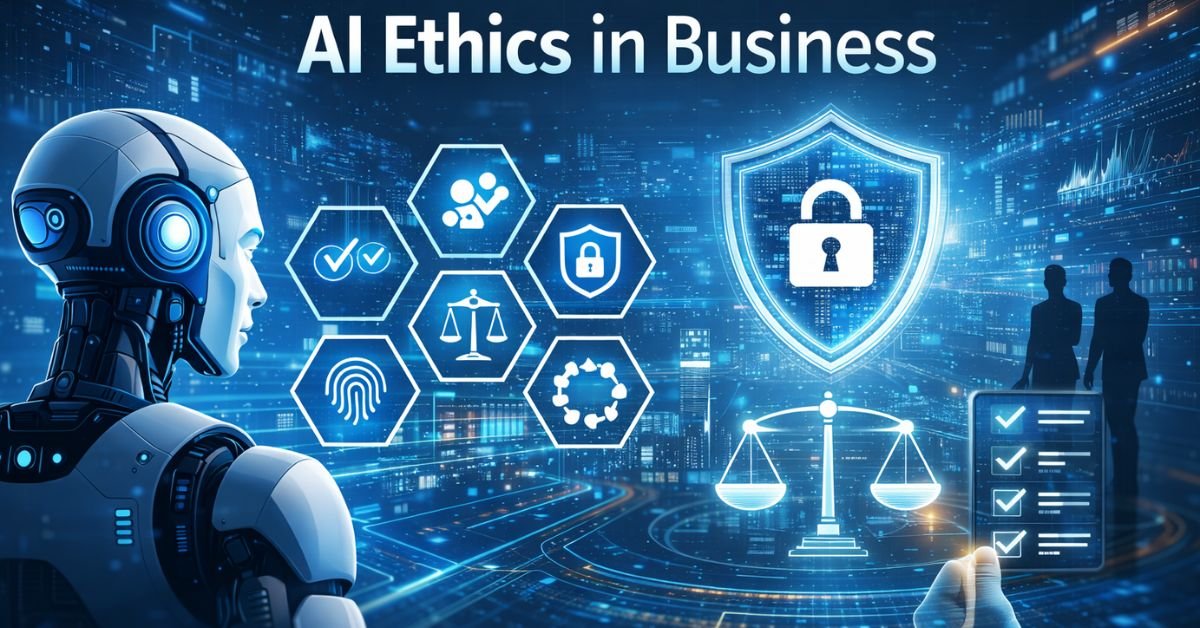
AI ethics in business means using artificial intelligence in a fair, safe, and responsible way. It focuses on doing the right thing with data and technology. Companies must respect privacy, avoid bias, and be open about how their AI systems work. When businesses follow ethical AI practices, they build trust with customers and protect their reputation.
Today, many companies use AI to make decisions in marketing, hiring, and customer service. However, when AI produces unfair or wrong choices, it can harm people and damage a brand. As technology plays a bigger role in daily life, people pay more attention to how companies use it. That is why AI ethics in business gains importance every day. This guide will show you how companies can implement AI ethically and make smart, responsible decisions.
Ethics in AI: Why It Matters
Ethics in AI means using artificial intelligence in a fair and safe way. It helps make sure AI treats people equally. It also protects user data and privacy. When AI follows ethical rules, people can trust the technology more. This trust is important in today’s digital world.
AI is now part of daily life. It helps in shopping, healthcare, and education. But AI can also make mistakes or show bias. This can harm people or give unfair results. That is why ethics in AI really matters. It guides how AI should be built and used.
The Importance of AI Ethics
AI ethics is important because it helps protect people. It makes sure AI systems are fair and safe. It also keeps personal data private. When companies follow AI ethics, they show responsibility. This builds trust with users.
AI is growing very fast in many fields. It helps in business, health, and education. But without ethics, AI can be misused. It can give biased or wrong results. That is why clear ethical rules are needed. They guide how AI should be created and used.
Ethical Challenges in AI

AI brings many benefits, but it also has ethical challenges. One big issue is bias in AI systems. If data is unfair, AI can give unfair results. Privacy is another concern. AI often uses personal data to work well. People worry about how their data is collected and used.
Another challenge is transparency. Many AI systems are hard to understand. People do not know how decisions are made. This can reduce trust. There is also the risk of job loss due to automation. These challenges show why careful rules and human control are needed.
| Ethical Challenge | What It Means | Why It Matters | Example |
| Bias & Discrimination | AI gives unfair results due to biased data | Can harm certain groups | Hiring AI favoring one gender |
| Data Privacy | Personal data is collected and used | Risks of data misuse | Apps tracking user behavior |
| Lack of Transparency | AI decisions are hard to explain | Reduces trust | Loan approval without clear reason |
| Accountability | Who is responsible for AI mistakes | Needed for justice | Self-driving car accidents |
| Job Displacement | AI replaces human jobs | Affects livelihoods | Automation in factories |
| Security Risks | AI systems can be hacked | Can cause data leaks | Cyberattacks on AI tools |
| Misuse of AI | AI used for harmful goals | Can harm society | Deepfakes spreading misinformation |
| Consent | Users unaware of data use | Violates rights | Data collected without permission |
| Human Control | Too much reliance on AI | Loss of human judgment | Doctors relying only on AI |
| Inequality | AI benefits not shared equally | Creates social gaps | Advanced AI only for rich firms |
AI Data & Privacy
AI uses data to learn and make decisions. This data often comes from people. It can include names, searches, and online actions. Privacy means keeping this data safe. People want to know their information is protected. They also want control over their data.
Problems happen when data is misused. Some companies collect more data than needed. Sometimes data is shared without clear permission. This can break trust. Strong privacy rules can help. Clear policies and safe systems protect users. Good data practices make AI safer for everyone.
Possible Bias in AI
Possible bias in AI happens when AI gives unfair results. This often comes from biased data. If the training data is not balanced, the AI learns the wrong patterns. It may favor one group over another. This can affect hiring, loans, and even healthcare.
Bias in AI can harm people. It can create unfair treatment. Many times, people do not notice this bias quickly. That is why testing is important. Developers should use diverse data. They should also check results often. Fair AI helps create equal chances for everyone.
The Impact of AI on Employment
AI is changing the way people work. Many companies use AI to save time and cut costs. Machines can now do some tasks faster than humans. This can replace certain jobs. Simple and repetitive work is most at risk. Some workers may need new skills.
At the same time, AI also creates new jobs. There is demand for tech and AI experts. People can learn new skills to stay ready. Training and education are important. AI can help workers be more productive. With the right balance, AI can support the future of work.
AI Governance
AI governance means that organizations create rules and guidelines for using AI. These rules help companies ensure AI operates safely, fairly, and responsibly. Companies and governments follow these guidelines to prevent harm. Governance also requires organizations to respect privacy and avoid bias.
Good AI governance builds trust by clearly defining who makes AI decisions. It also sets standards for transparency and accountability. With proper governance, companies can use AI safely in business, healthcare, and everyday life.
The Future of AI Ethics

The future of AI ethics is very important as AI keeps growing. Companies and governments are working on clear rules. These rules will make AI fairer and safer. People expect AI to respect privacy and avoid bias. Ethical AI can help build trust in technology.
In the coming years, we may see:
- Stricter privacy and data protection laws
- More transparent AI systems
- AI designed to reduce bias and discrimination
- Training programs to teach ethical AI to developers
- Global cooperation on AI standards
A Human Rights Approach to AI
A human rights approach to AI means putting people first. In this approach, AI should respect basic rights like privacy, equality, and freedom. Furthermore, technology must not harm anyone or discriminate. Therefore, companies should carefully consider how AI affects individuals and communities.
Moreover, this approach guides governments and businesses. For instance, they create rules to protect users and ensure fairness. As a result, it encourages accountability in AI systems. By focusing on human rights, AI can be used safely and responsibly, allowing people to trust AI while benefiting from its technology.
Examples of Ethical Dilemmas
AI often creates situations where the right choice is not clear. For example, self-driving cars may face accidents and must choose between protecting passengers or pedestrians. Similarly, hiring systems can create dilemmas when AI favors certain candidates without intending to.
In addition, AI can misuse personal data or make decisions without human oversight. Moreover, deepfakes and predictive policing raise serious concerns. Therefore, these dilemmas show why strong ethical rules are needed. As a result, following ethical guidelines helps make AI safe and fair for everyone.
FAQs
- What is AI ethics?
AI ethics is the study of how to use artificial intelligence in a fair, safe, and responsible way. - Why is AI ethics important?
It helps prevent bias, protects privacy, and builds trust in AI technology. - What are common ethical challenges in AI?
Bias, lack of transparency, data privacy issues, and job displacement are common challenges. - How can businesses follow AI ethics?
By creating rules, using diverse data, ensuring transparency, and respecting user privacy. - What is a human rights approach to AI?
It focuses on protecting people’s rights like privacy, equality, and freedom when using AI.
Conclusion
Technology is changing the world in many ways, especially in modern companies. Implementing AI ethics in business helps organizations use artificial intelligence safely and fairly. By following these ethical practices, businesses protect people, build trust, and make responsible decisions.
Companies, governments, and individuals must support AI ethics in business because it is not just smart, it is necessary. When businesses focus on fairness, privacy, and responsibility, they turn AI into a tool for good. AI ethics in business helps society grow and keeps people safe.